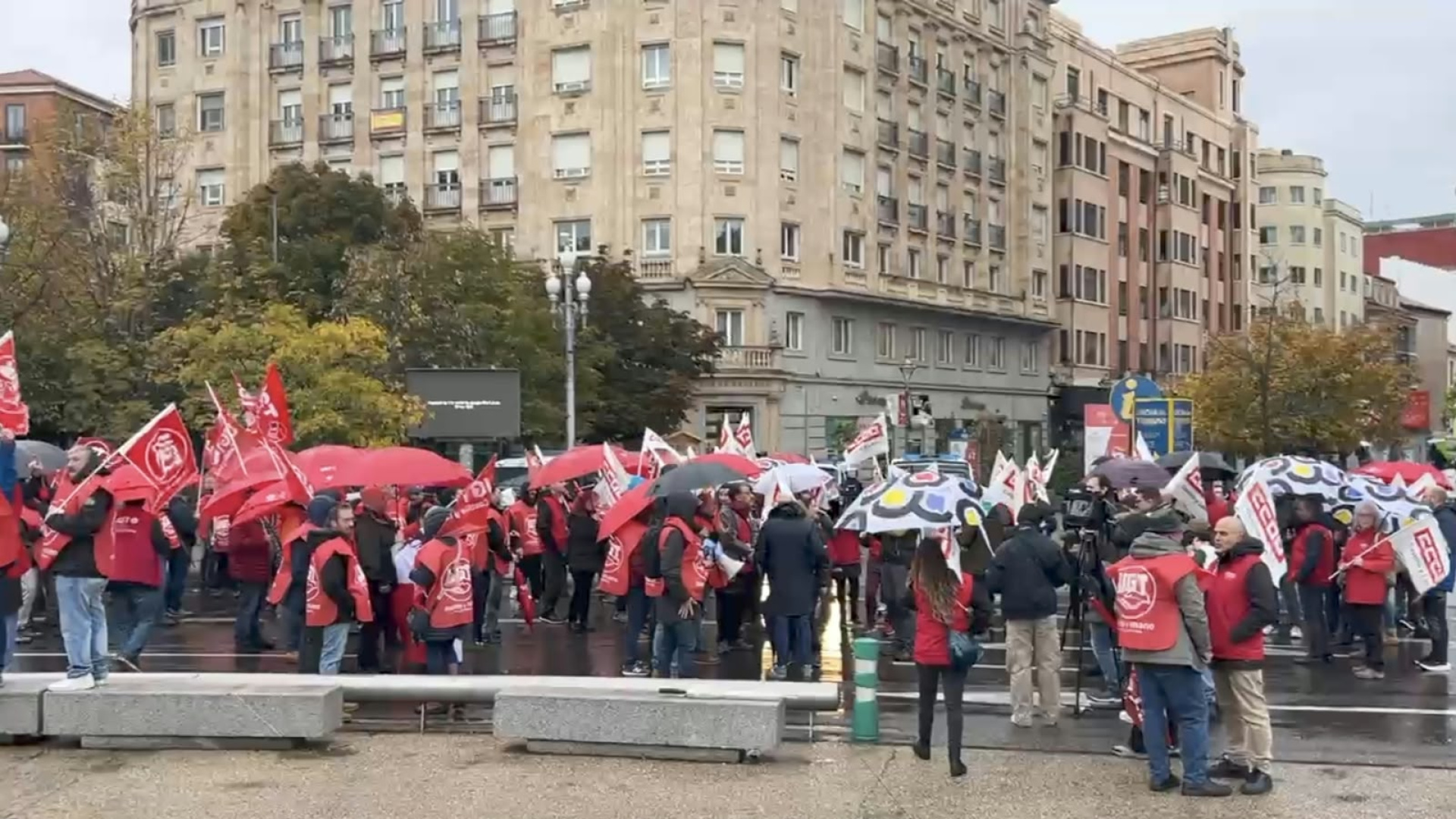
A general strike brought central Valladolid to a standstill on 11 November as union demonstrators marched to demand higher pay and affordable housing.
Traffic ground to a halt during the morning rush hour as protesters moved slowly along Paseo de Filipinos toward Plaza de Zorrilla, causing severe congestion on Paseo de Zorrilla that disrupted travel to schools, offices and local businesses.
Spain's two largest labour confederations, the General Workers' Union and the Workers' Commissions, called the walkout across the autonomous community of Castilla y Leon. Organisers mobilised workers to press regional and national authorities for wage increases, guaranteed access to decent housing and the reinforcement of public services.
Morning picket lines and traffic disruption
The strike began quietly before dawn, with union members deploying information pickets to several strategic points across the provincial capital. Organisers reported that the initial hours of the stoppage proceeded peacefully and without any notable public order incidents.
Union pickets positioned themselves at key work centres and transport hubs to speak with arriving employees and hand out leaflets explaining the reasons for the protest. The groups focused their discussions on the erosion of purchasing power, rising property prices and strains on public healthcare and education.
The march through the city centre created an immediate bottleneck at Plaza de Zorrilla, a central square that borders the Campo Grande park and connects the commercial centre with residential districts to the south. Vehicles backed up along Paseo de Zorrilla, one of the city's primary multi-lane thoroughfares, stranding morning commuters and delivery vehicles during peak business hours.
Union demands on housing and wages
Ana Fernandez, the regional general secretary of the Workers' Commissions in Castilla y Leon, said housing had turned into a direct driver of poverty across the region. She argued that working families could no longer cope with escalating living costs without meaningful government intervention.
Fernandez insisted that ordinary citizens must have the right to decent and affordable housing. She stressed that national wealth needed to be redistributed more equitably through improved salaries, arguing that working people should not be forced to shoulder the burden of inflation alone.
The Workers' Commissions, known in Spain as Comisiones Obreras or CCOO, is Spain's largest trade union by workplace delegate representation. The confederation frequently coordinates national collective bargaining agreements alongside its traditional social partner, the General Workers' Union.
Afternoon rallies across Castilla y Leon
Union leaders called on the wider public to join mass demonstrations organised for the afternoon in every provincial capital across Castilla y Leon. Organisers described the afternoon marches as unified public demonstrations bringing together a broad coalition of civic groups.
Fernandez said numerous social organisations had joined the strike call because they shared identical objectives, specifically securing dignified housing, raising wages and stopping prices from consuming household income. She maintained that broad public participation was essential to demonstrate collective solidarity.
The CCOO leader pointed to visible paralysis across Valladolid during the morning, arguing that the disruption showed the strike was achieving its planned goals despite differing views among residents. She expressed hope that the afternoon protests would become a powerful collective outcry to safeguard worker rights against announced threats of deregulation.
Castilla y Leon is Spain's largest autonomous community by land area, encompassing nine provinces that include Valladolid, Burgos, Salamanca and Leon. The regional parliament and regional ministries have their permanent seats in Valladolid, making the city a central focal point for regional political demonstrations.
Democratic rights and living standards
Oscar Lobo, the regional general secretary of the General Workers' Union in Castilla y Leon, defended the general strike as an essential effort to improve living conditions and daily life for people across the country. He described the mobilization as a vital democratic tool for working citizens.
Lobo stated that the walkout was fully justified, necessary and genuinely important for the health of Spanish democracy. He urged members of the public to use diverse peaceful methods to express their dissatisfaction, frustration and hope for changing national economic policies.
The UGT leader reiterated that the central demands of the day centred on winning higher wages, securing the fundamental right to housing, resisting persistent price increases and defending the public pension system. He added that workers needed permanent protections rather than temporary economic measures.
The General Workers' Union, known in Spain as the Union General de Trabajadores or UGT, was founded in 1888 and maintains close historic ties with the Spanish socialist movement. Together with CCOO, UGT holds official status as one of Spain's most representative trade unions, granting it statutory standing to negotiate labour pacts.
Strike turnout and future assessments
Neither union released concrete attendance figures or percentage estimates for worker participation during the night shifts or the opening hours of the day. Organisers said detailed statistical monitoring of the walkout would take time to assemble across different industrial sectors.
Union officials nonetheless insisted that the strike had found a strong reception among the workforce, stating that large numbers of employees shared the concerns driving the protests. Organisers said they would compile a more comprehensive assessment of the strike's overall impact as the day progressed.