

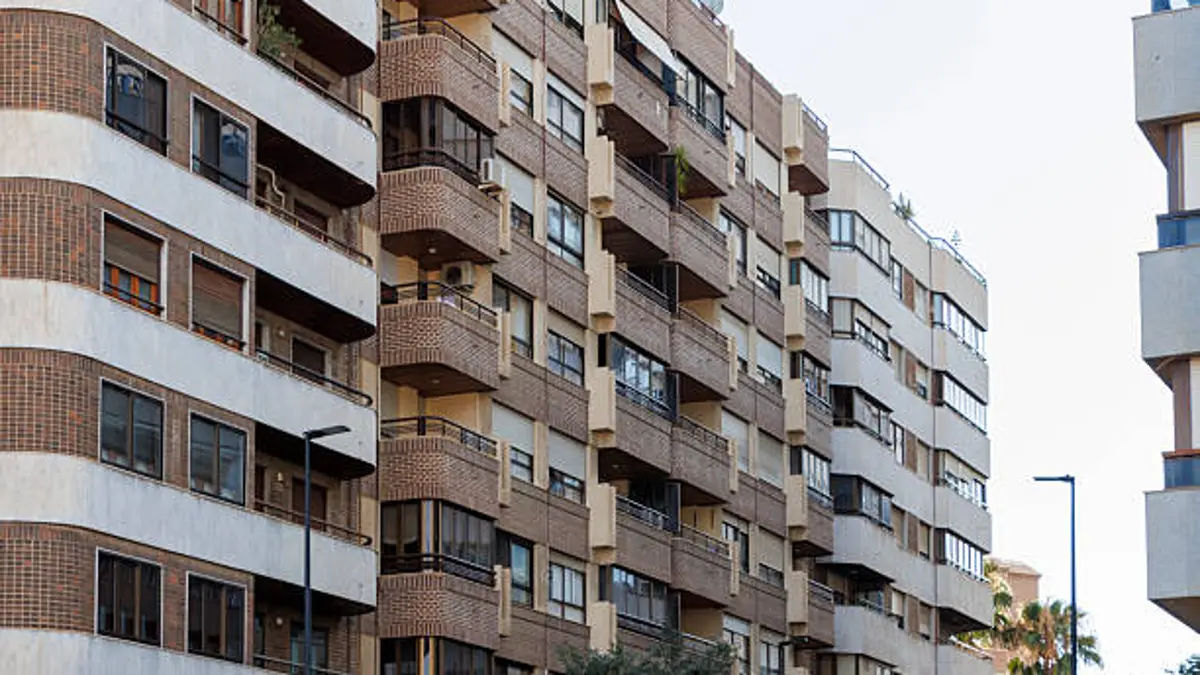
Rising housing costs in Spain have left 1.95 million people at risk of poverty after paying for their accommodation, official economic data reveals.
The figures highlight a sharp economic contrast across the country, where record household wealth coexists with deepening residential hardship, according to data from the Bank of Spain and the Foundation for Applied Economics Studies.
Residential vulnerability is most severe among households renting at market prices. In that group, the poverty rate stands at 32.8 percent before paying rent, but jumps to 49.9 percent once rental costs are settled.
The findings were published in the latest Financial Accounts of the Spanish Economy report from the Bank of Spain, the national central bank, alongside research on housing vulnerability from the Madrid-based economic foundation Fedea.
According to the central bank data, the net financial wealth of Spanish households has reached an unprecedented 2.81 trillion euros. This historic peak has been propelled primarily by positive performances across financial investment markets.
At the same time, overall household debt across Spain has dropped to levels not seen since 1999, continuing a long-term reduction in borrowing across the wider economy.
Unequal distribution of financial wealth
The central bank report indicates that improvements in headline financial indicators have not benefited the population equally. Instead, the 2.81 trillion euros in net financial wealth is heavily concentrated in investment funds, equities and bank deposits held by top-earning households.
A major cause of this divide is the unequal distribution of household savings. While wealthier individuals channel extra income into lucrative investment funds and the stock market, lower-income households have far more restricted financial resources.
Families with limited resources must allocate a large share of their earnings to basic living costs and housing. This leaves them with little to no financial cushion to build savings or acquire assets that could shield them during economic downturns.
Consequently, while wealthier families expand their balance sheets through financial investments, low-income households struggle to manage routine day-to-day expenditures.
Divide between homeowners and renters
The economic disparity is also tightly linked to property tenure and generational differences. Homeowners in Spain currently hold approximately 93.5 percent of the country's total net wealth, while tenants hold only the remaining 6.5 percent.
This distribution illustrates the vast financial distance separating families who own property from those who depend entirely on the private rental market. In Spain, older generations largely benefited from widespread property ownership, whereas younger citizens face much steeper hurdles to entering the housing market.
The Fedea foundation, known formally as the Foundation for Applied Economics Studies, regularly examines structural issues in the Spanish economy, including housing vulnerability and labor dynamics. Its researchers warn that reliance on rental housing increasingly drives social inequality.
Rising prices in the property market
Compounding the problem is the relentless inflation in Spanish property values. Real estate prices in Spain have now logged 45 consecutive quarters of year-on-year increases, representing more than eleven continuous years of quarterly price growth.
The escalation has been especially rapid in the market for existing properties. The cost of second-hand housing has surged by more than 12 percent over the past year alone, shutting many prospective buyers out of the market.
The Bank of Spain, which monitors domestic financial stability and the banking sector from its headquarters in Madrid, regularly tracks housing affordability indicators to assess economic risks facing households.
The combination of high rental rates, rising purchase prices and disparities in property ownership makes it increasingly difficult for less affluent citizens to improve their financial situation. While national wealth totals reach new records, housing costs continue to push hundreds of thousands of Spanish families deeper into financial precarity.


