

The Sao Paulo stock exchange halted trading on Monday after shares plunged by 16.6 percent following Luiz Inacio Lula da Silva's presidential election victory.
The operator of the B3 exchange triggered an emergency 30-minute trading suspension shortly after the opening bell, activating a circuit breaker mechanism after the benchmark index crashed beyond the ten percent threshold required for a mandatory pause.
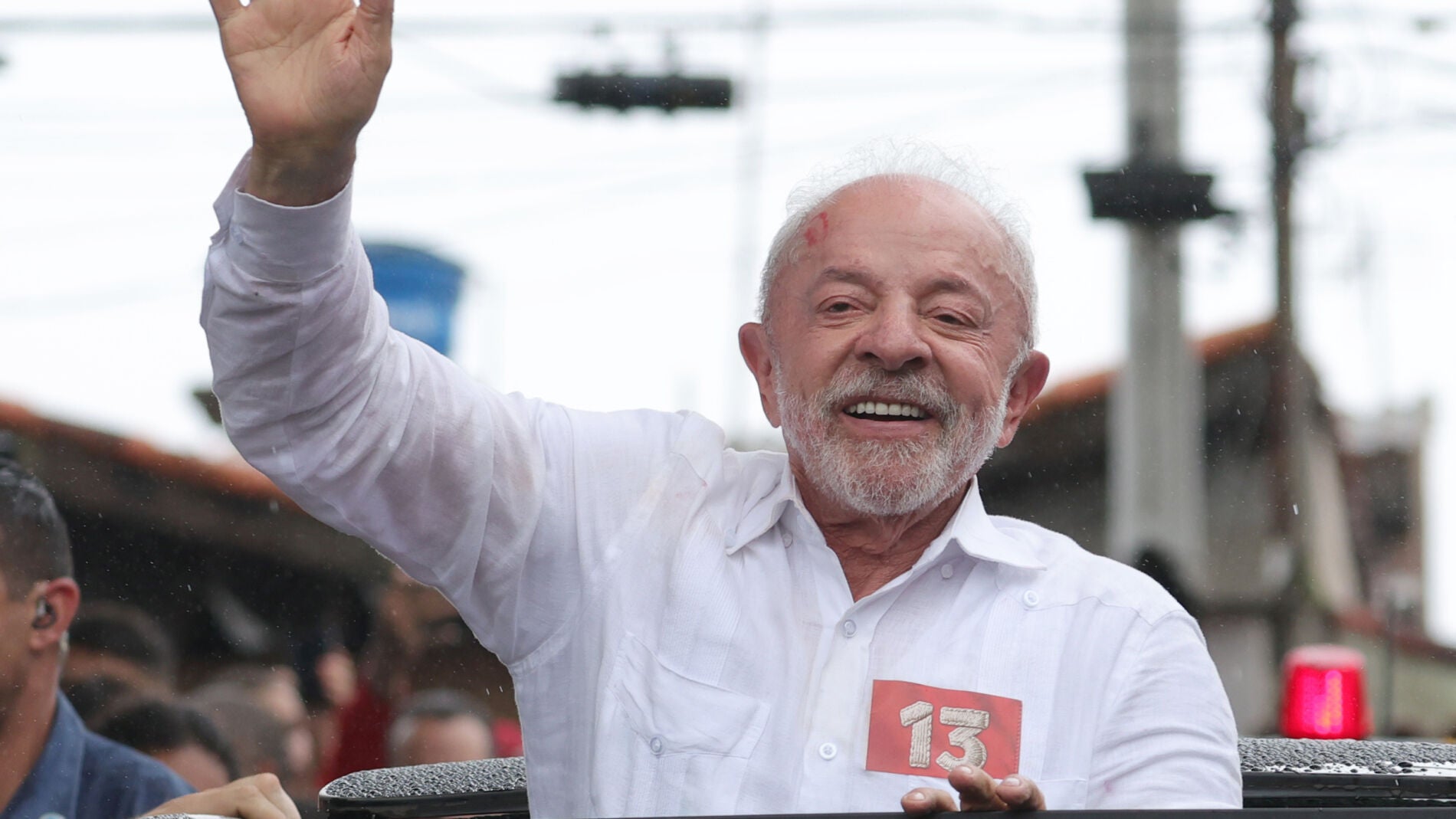
The market panic followed Sunday's runoff election, in which the leftist Workers' Party leader secured 51.79 percent of the vote compared to 48.21 percent for conservative senator Flavio Bolsonaro.
Bolsonaro has announced that he will legally challenge the election results, a decision that immediately stoked political uncertainty among investors who had positioned their portfolios for his victory.
Market crash and circuit breaker triggers
The benchmark Bovespa index fell sharply during the opening minutes of trade, dropping to around 170,000 points from Friday's closing mark of 205,083 points.
Selling pressure continued across the trading floor throughout the day. By mid-session, the exchange remained down by more than 15 percent, and by 17:30 local time the index stood at a loss of 31,487 points, marking a decline of 15.87 percent.
Exchange administrators halted transactions under rules that mandate an extraordinary 30-minute pause whenever the main index sheds more than ten percent. Circuit breakers operate on major financial exchanges worldwide as automated safeguards, intended to halt panic selling and allow brokers time to process heavy order flows.
The B3 stock exchange, based in Sao Paulo, serves as the main financial hub for equities and derivatives in Latin America. The steep drop reflected rapid repricing across Brazilian financial assets as equity traders recalibrated their models following weeks of bullish positioning on a conservative victory.
Congressional opposition to the new administration
Investors expressed deep concern over the political environment facing Lula, who at the age of 80 is preparing to enter his fourth presidential administration.
The leftist president will be forced to govern alongside the largest opposition bloc in the National Congress across his four terms in power. Market participants expect that this legislative arithmetic will force the government to make significant concessions to push forward its legislative agenda.
Much of the balance of power in the capital of Brasilia resides with the Centrao, a powerful coalition of centre and centre-right political parties. The bloc holds 246 seats in the 513-member Chamber of Deputies and 30 seats in the 81-member Federal Senate.
The Centrao threw its formal support behind Bolsonaro during the second round of voting. Political analysts expect the group to demand a high price in political posts and budgetary control in return for supporting government legislation.
The Centrao has historically functioned as an unaligned, transaction-oriented force in Brazilian governance. Without an outright ideological majority, past administrations from both the left and right have depended on coalition negotiations with Centrao leaders to avoid legislative gridlock.
Fiscal concerns and analyst warnings
Financial analysts warned that the sudden change in political leadership raises immediate questions about public expenditure and state involvement in the economy.
Eirini Tsekeridou, a fixed income analyst at the private banking firm Julius Baer, explained that financial markets had largely priced in a Bolsonaro victory following the first round of voting in early October.
Tsekeridou said the election outcome pointed to a significant correction across Brazilian assets and heightened volatility, noting that persistent doubts surround future fiscal policy under the incoming administration.
Julius Baer is a prominent wealth management group based in Switzerland with extensive research coverage of emerging market debt and equities. Foreign institutional investors frequently track fiscal discipline in Brazil, where public debt trajectories and constitutional spending limits represent key benchmarks for sovereign risk.
Sharp declines for Spanish multinational shares
The market rout in Sao Paulo had an immediate impact on major Spanish companies with substantial operations and secondary listings in Brazil.
Shares in Telefonica Brasil, which trades locally and operates under the Vivo mobile brand, tumbled by 7.7 percent. Financial services giant Banco Santander saw its Brazilian banking unit shed 4 percent during the session.
Neoenergia, the Brazilian energy subsidiary controlled by Spanish utility Iberdrola, was an exception to the wider sell-off, holding onto a slight gain of 0.15 percent.
Brazil is one of the most critical foreign markets for Spanish corporate investment. Over the past three decades, Spanish banks, telecommunications operators, and utility providers have directed tens of billions of euros into South America's largest economy, making their corporate earnings highly sensitive to Brazilian economic cycles and exchange rate swings.
Political battle lines and upcoming challenges
Lula first led Brazil between 2003 and 2010 after rising from poverty as a metalworkers' union organiser to found the Workers' Party during the military dictatorship. He returned to the presidency in 2022 before securing his historic fourth term in Sunday's election.
Flavio Bolsonaro, a lawyer and federal senator representing Rio de Janeiro, campaigned as the political successor to his father, former president Jair Bolsonaro, advocating deregulation and fiscal conservatism.
Market participants are now watching for the formal submission of Bolsonaro's legal challenge to the vote, as well as Lula's initial announcements regarding his economic team and transition negotiations with congressional leaders.