The Central Bank of Russia has sharply raised the official exchange rate of the U.S. dollar to approximately 83 rubles for Thursday, August 13. Official data published on the financial regulator's website confirmed the rate adjustment, reflecting ongoing shifts across Russia's foreign exchange market.
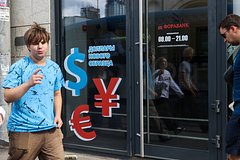
The updated benchmark marks an increase of 63 kopecks from Wednesday, August 12, when the official U.S. dollar exchange rate stood at 82.37 rubles. At the same time, the regulator increased the official euro rate by 60 kopecks, lifting it from 95.18 rubles to 95.78 rubles. Meanwhile, the Chinese yuan traded on the Moscow Exchange within a range of 12.25 to 12.3 rubles.
The Central Bank of Russia sets daily benchmark exchange rates that guide financial accounting and banking transactions across the country. One kopeck is equal to one-hundredth of a ruble.
Ruble Exchange Rate Forecasts
Further currency movements could see the U.S. dollar rise to 84.5 rubles by mid-August, according to Guzel Protsenko, the head of financial brokerage Alfa-Forex. Protsenko said that several key economic pressure points would drive the Russian currency lower over the coming weeks.
Protsenko explained that ongoing geopolitical tensions and international sanctions continue to weigh on the ruble. She added that rising domestic demand for foreign currency, along with foreign exchange interventions conducted by the Ministry of Finance, would also contribute to further currency weakening.
Alfa-Forex is a prominent retail currency brokerage operating in Russia. Market interventions by financial authorities involve purchasing or selling foreign currencies to stabilize the national monetary system.
Impact on Exporters and Federal Budget
Taking a broader view of currency valuation, Andrei Kostin, the head of state-owned commercial bank VTB, previously described an exchange rate between 90 and 100 rubles per dollar as a more optimal corridor for the Russian economy. Kostin said that a exchange rate in that range would benefit key sectors of the domestic economy.
Kostin explained that a weaker ruble allows domestic exporters to report increased revenues in local currency terms. He added that a higher dollar rate yields additional revenue for the federal budget from energy sales, which he noted is particularly important given the rapid expansion of Russia's treasury deficit.
VTB Bank is one of Russia's largest state-backed banking institutions. Energy exports, including crude oil and natural gas, generate a significant portion of Russia's federal tax receipts, which are converted into rubles to cover government spending.