Luis Villanueva, president of the General Confederation of Workers of Peru, has questioned the government's decision to split the minimum wage increase into two stages.
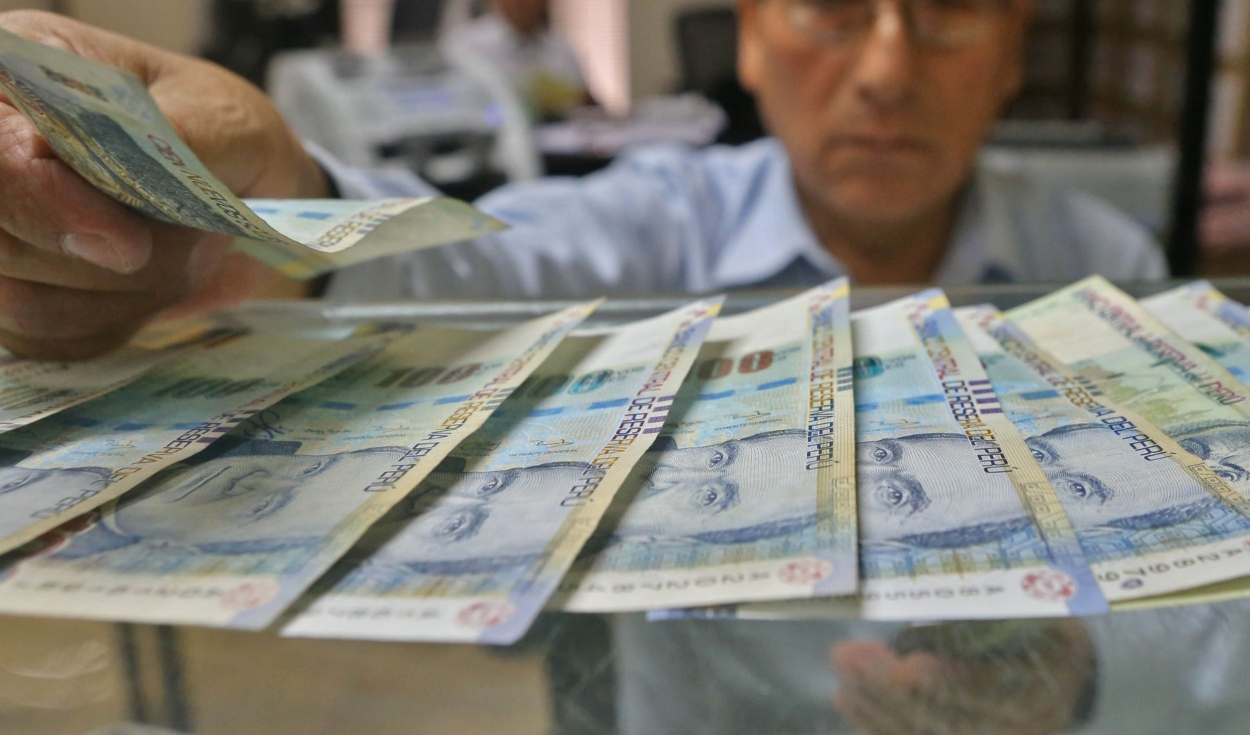
The Peruvian government announced that the official minimum wage, known as the Remuneración Mínima Vital, will rise by 100 soles, increasing from 1,130 soles to 1,230 soles per month starting on October 1.
Speaking in an interview with Peruvian news channel Canal N, Villanueva said the trade union federation values the initial increase to 1,230 soles. However, he stressed that the remaining 70 soles should have been included from the start to reach the 1,300 soles announced by the president.
Villanueva stated that at no point during the presidential address was 1,230 soles mentioned, adding that there was no prior talk of dividing the salary increase into two separate tranches or stages.
The Remuneración Mínima Vital is Peru's legal minimum wage, set by the national government to establish the baseline monthly income for formal private-sector workers across the country.
Concerns over El Niño and wage calculation
The union leader expressed concern that leaving part of the wage increase for a second stage, subject to economic conditions created by the El Niño weather phenomenon, introduces uncertainty over when the full adjustment will be completed.
El Niño is a recurring climate pattern marked by warming ocean temperatures in the Pacific that periodically causes heavy rainfall, flooding, and economic disruption across coastal Peru.
Villanueva raised the need for an official mechanism in Peru to establish on a predictable schedule when and by how much the minimum wage should be adjusted.
Addressing the target level for the minimum salary, Villanueva said an ideal figure closer to economic reality would be 1,700 soles per month. He affirmed that 1,700 soles would be more appropriate when considering inflation, the cost of the basic family shopping basket, and other key economic indicators.
National Labour Council discussions
Villanueva recalled that in 2007, discussions were held within the National Labour Council regarding the gap between the minimum wage and the cost of living in Peru.
He explained that regular salary reviews should be guided by economic indicators to prevent wage increases from being established without a clear periodicity.
The National Labour Council, known locally as the Consejo Nacional de Trabajo, is Peru's official tripartite consultation forum where representatives from government, trade unions, and business associations negotiate labor policies.
The General Confederation of Workers of Peru, or CGTP, is the country's main trade union federation, representing workers across key industries in national consultations.
Rejection of labor flexibility by decree
During the interview, Villanueva also commented on the executive branch's request for special legislative powers from congress, expressing strong opposition to potential modifications that would increase the flexibilisation of labor rules.
He argued that any changes regarding labor matters must be debated within the National Labour Council, with direct participation from both workers and employers.
Villanueva said that on labor matters the union's stance is no to executive decrees, maintaining that institutional dialogue must take place before altering regulations that govern employment relations.
Under Peru's constitution, legislative powers allow congress to temporarily delegate authority to the executive branch to issue binding decrees on specific policy areas.
Civil construction workers plan protest
Villanueva also announced that the Civil Construction Workers Federation of Peru has called for a national mobilization on Thursday, October 1.
The union action is linked to the formal presentation of the federation's collective bargaining agreement project before the Ministry of Labour.
The protest forms part of branch-level collective bargaining negotiations, through which construction workers across the country discuss wage rates and working conditions directly with employers.
The Ministry of Labour oversees formal labor relations in Peru, supervising collective bargaining frameworks and occupational standards across economic sectors.