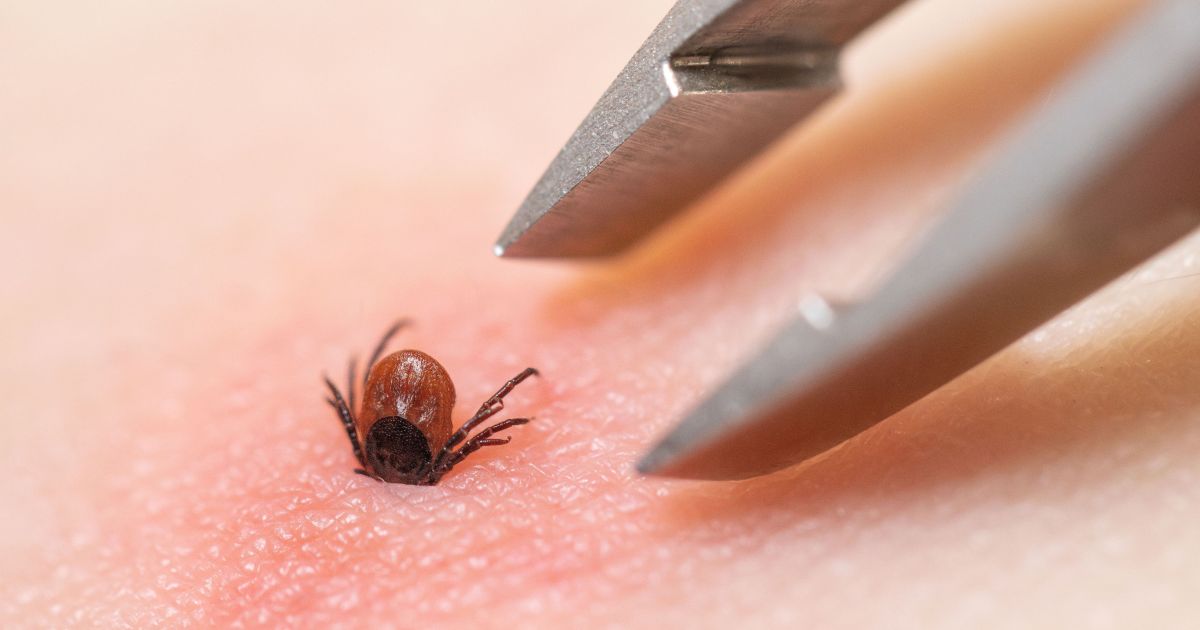
John Reagan, a 66-year-old retired pharmacist from Concord, New Hampshire, was enjoying the first months of retirement when he pulled a tick off his skin in early May. He barely gave it a second thought.
Reagan loved being outdoors, often hunting, fishing or taking long walks with his son's and daughter's dogs, known in the family as the "grandpups." He knew the risks of tick bites well, since Lyme disease is common where he lives. Because an infected tick generally needs about 36 hours attached to the skin to transmit Lyme disease, he removed the tick almost as soon as he got home and believed he was in the clear.
A few weeks later he developed flu-like symptoms, including headache, body aches, fever, nausea and diarrhea. He went to a local emergency room in mid-May, but doctors could not identify the cause and sent him home after giving him fluids and anti-nausea medication. His condition kept getting worse.
Diagnosis after a hospital transfer
His wife thought he might be having a stroke. Back at the hospital, he lost the ability to speak, move or even open his eyes, yet his test results kept coming back negative. When his family asked whether it could be linked to the tick bite from weeks earlier, they were told no.
Reagan was transferred to Massachusetts General Hospital in Boston, where doctors ran a series of tests, including screenings for tick-borne diseases, and sent a blood sample to a specialized lab at the Mayo Clinic. On June 9, his family got the diagnosis: Powassan virus, a rare and serious infection he had almost certainly picked up from the tick he had all but forgotten about. Unlike Lyme disease, Powassan virus can pass from a tick to a person in as little as 15 minutes. Until then, the family had never heard of it.
Tick-borne diseases on the rise
Ticks and the diseases they spread are becoming more common across the United States. About 90% of all bite-related illnesses in the country, including those spread by mosquitoes, are transmitted by ticks. Lyme disease, the most common tick-borne illness, is on the rise and now causes nearly half a million cases a year, according to CDC estimates. Another growing threat is alpha-gal syndrome, an allergy to meat and other animal products that can be triggered by a bite from the lone star tick.
Powassan virus disease remains extremely rare, with fewer than 100 cases diagnosed and reported in the United States each year, the CDC says. But that number has also been climbing in recent years as populations of the ticks that carry the virus have grown.
"There are more ticks in more places," said Dr. Stephen Rich, a microbiologist at the University of Massachusetts Amherst who runs TickReport, a service that lets the public test a tick for disease-causing pathogens. "Whenever there's more of something, more vectors, there will inevitably be more pathogens."
In 2025, 76 human cases of Powassan virus disease were reported in the U.S., a record number. Ten of those cases were fatal.
The virus was first identified by Canadian scientists in the 1950s, after a boy who had been hunting groundhogs with his father developed a severe illness with brain swelling and died. The virus was later isolated from his brain and named after the Ontario town where the family lived. It is spread by the black-legged tick, also known as the deer tick, the same species that carries Lyme disease, and belongs to the same family of viruses as West Nile virus and Zika. About one in 10 cases is fatal, and roughly half of survivors experience long-term complications.

After months of fear and uncertainty, not knowing whether they would get their father back, the Reagan family is eager to raise awareness of how serious Powassan virus can be. Because there is no specific treatment, the only way to protect people is to make them aware of the disease and encourage steps to avoid tick bites, said John's son, Jeff Reagan.
"Protect yourself or your loved ones if they've been bitten by a tick recently," he said, "because not all healthcare providers are familiar with Powassan disease."
A scare, then months of recovery
Early in his hospitalization, brain swelling caused John Reagan to stop breathing. Doctors inserted a breathing tube and a feeding tube and placed him on a ventilator, hoping that supporting his vital functions with machines would give his body time to recover in intensive care.
The strategy worked. After nearly a month, he woke up and began to recover his ability to communicate. He could follow some commands, but having been bedridden for so long, other complications developed, including blood clots and pneumonia. Doctors were able to bring those under control, and John has been slowly regaining his ability to move. Since early July he has been at Spaulding Rehabilitation Hospital in Boston, working to walk, talk and think clearly again.
"He wants to walk and is trying to regain coordination, balance and depth perception," Jeff Reagan said.

While his father's progress has been encouraging, Jeff knows there are still months of recovery ahead. "It's been a rollercoaster," he said. "He's made very good progress, especially with his cognition."
As his father was waking up, Jeff said he mostly just listened and went along with things. Now his emotions are returning. "I think he's realized something like, 'wow, I was basically in a coma for almost a month and I almost died,' and he got pretty emotional about that, which is a good sign that the brain is recovering properly," Jeff said.
As with other insect-borne illnesses, experts believe some people become infected but do not get very sick because their immune systems clear the virus. "But in a significant share of cases, the virus is able to replicate effectively in neurons and other brain cells, and that's where brain damage can occur," said Dr. Greg Ebel, a professor of microbiology, immunology and pathology at Colorado State University's Center for Vector-Borne Infectious Diseases.
Ebel said the immune system then gets the message that something is wrong in the brain and produces chemicals that should not be there to mount a counterattack. "So there are two problems: one is that the virus is killing neurons and other cells, and the other is that the immune system is making things worse," he said.
Funding for better tests and treatments
Powassan virus disease can be extremely severe, but because case numbers are low, there is no commercial market to support developing a vaccine or drug to treat it. That makes government funding crucial for research into tests, treatments and cures.
This year, both chambers of Congress passed the Kay Hagan Tick Act reauthorization, named for the North Carolina senator who died in 2019 from complications of Powassan disease. The bill now awaits a vote on its final version and would direct $150 million over five years to researchers and local health departments working to combat vector-borne diseases.

"The tick problem in the United States is growing, and the federal investment we make in fighting these parasites needs to keep pace with that growth," Senator Jack Reed, a Democrat from Rhode Island and one of the bill's co-authors, said in a statement. "The Kay Hagan Tick Act has already improved public health knowledge and prevention strategies, but we need to do more."
John Reagan no longer needs the breathing tube, but he still gets most of his nutrition through a tube inserted in his abdomen. Doctors had hoped he could go home by the end of August, but new shoulder and back pain delayed that plan, and he continues rehabilitation in the hospital for now.
Despite the setbacks, there has been progress to celebrate. This week, doctors cleared John to eat ice cream, which made him very happy, Jeff said. Coffee is one of his favorite flavors.
Jeff thinks his father will still need the feeding tube for a while after he goes home. The family has already built a ramp in front of the house and installed grab bars to help him get around more easily. Even with the setbacks, the Reagans know John is one of the lucky ones: he is going home.