


The Royal Monastery of Santa Isabel in Madrid stands on land once owned by King Philip II's royal secretary Antonio Perez following a court love affair.
King Philip II established the monastery on Santa Isabel street, creating a landmark that gave its name to the former Royal Tapestry Factory depicted by Diego Velazquez in his painting Las Hilanderas.
The royal patronage originally assigned a dual purpose to the church: serving as an Augustinian convent and operating a school for the daughters of Royal Household servants.
Origins and early royal patronage
The monastery first established temporary quarters on Calle del Principe within property belonging to a wealthy widow named Prudencia Grillo, who served as the primary driving force behind the initial foundation.
The institution brought together two separate foundations: a girls' school called Casa del Recogimiento de Santa Isabel, established in Alcala de Henares in 1595 by King Philip II's daughter Isabel Clara Eugenia, and a cloistered convent of Augustinian Recollect nuns founded in 1589 by Augustinian saint Fray Alonso de Orozco, a reformer of the order.
The nuns later moved to their permanent location on Calle de Atocha to escape the noise and discomfort caused by the neighboring Corral de Comedias del Principe theater.
Queen Margaret of Austria, wife of King Philip III, created the Royal Patronage in 1610 and transferred "La Casilla", the country estate and palace of secretary Antonio Perez, to the nuns. Part of that historic building still stands within the modern cloister.
Royal disputes and administrative changes
The move sparked friction between the nuns and their royal patrons after Queen Margaret tried to subject the community to reforms led by Mother Mariana de San Jose, whom the queen had selected to direct the new Monasterio de la Encarnacion while temporarily staying at Santa Isabel.
Construction of the church began after the disputes were resolved during the reign of King Philip IV.
In 1649, King Philip IV granted a request from the nuns to relieve them of running the school, entrusting the institution first to a group of laywomen and later to the Assumptionist order, which continues to manage it today.
Artistic treasures and scandal
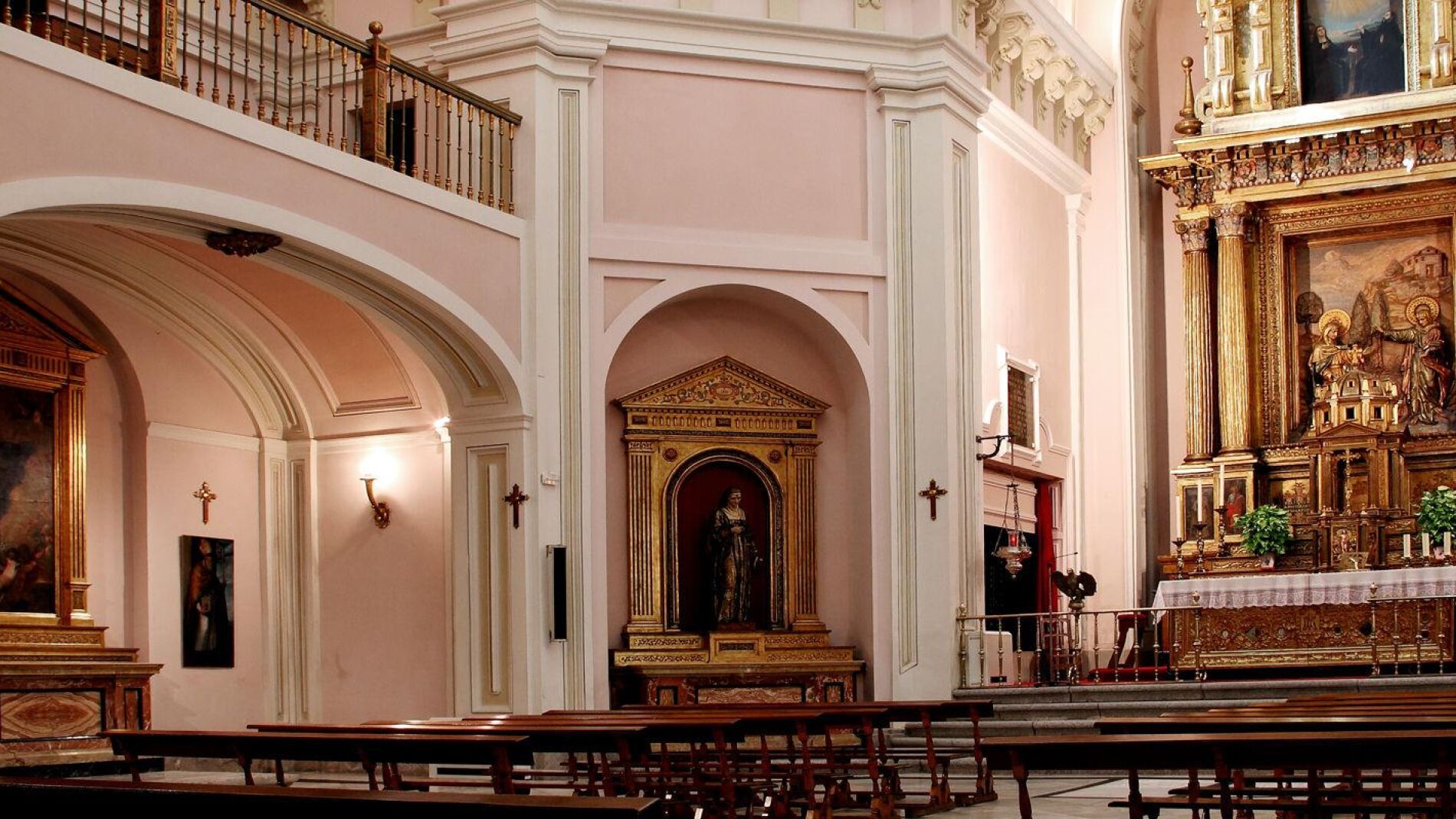
The main body of the church altarpiece originally held a large painting of the Immaculate Conception by Jose de Ribera, commissioned by Don Juan Jose de Austria, the Viceroy of Naples.
Accounts state that the nuns later had artist Claudio Coello repaint the head of the Virgin Mary because they believed it was a portrait of Ribera's daughter, with whom the Viceroy reportedly had an illicit relationship.
War, exile, and modern reconstruction
Directives issued in 1810 by Joseph Bonaparte, brother of Emperor Napoleon Bonaparte, ordered the suppression of religious communities with fewer than ten members, forcing the nuns to abandon the monastery.
French troops looted the complex, and the religious sisters were unable to return to their home until 1816.
Although the monastery survived the 19th-century confiscation laws, municipal ordinances threatened it with total destruction in 1870.
Josemaria Escriva joined the Patronato de Santa Isabel as an interim chaplain without salary or appointment in September 1931, before being named rector-administrator in December 1934 with a salary and living quarters.
Following the election victory of the Popular Front, authorities decreed the seizure of church assets, forcing the nuns to move into an apartment on Calle del Angel.
At the outbreak of the Spanish Civil War, the monastery was set on fire and many of its artwork treasures were destroyed.
The monastery was reconstructed in 1946 using funds from the sale of surviving artworks and support from the General Directorate for Devastated Regions and Repairs.


