


Spanish company Kreios Space is preparing to test a satellite engine that uses Earth's atmosphere as propellant to operate in ultra-low orbits.
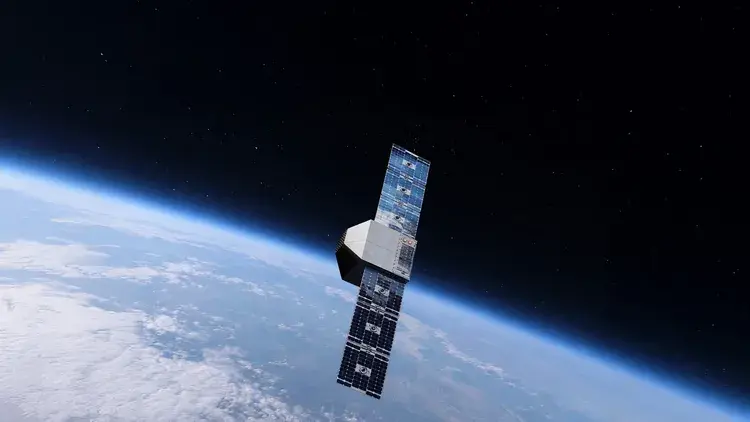
The Air-Breathing Electric Propulsion system, known as ABEP, could allow spacecraft to function for years without carrying large propellant reserves. Kreios Space aims to launch its first demonstration satellite into very low Earth orbit in 2027.
The engine operates similarly to a jet engine, but it collects extremely thin atmosphere at high altitudes. The satellite captures gas molecules, heats and ionizes them, and accelerates the resulting plasma to generate thrust. Solar panels generate the electricity needed to run the system while the engine gathers its propellant from the surrounding air.
How ultra-low orbit propulsion works
ABEP is designed for ultra-low orbits between 100 and 400 kilometers above Earth. Satellites at these altitudes experience drag from residual atmospheric gases, which slows them down and lowers their orbit. Standard engines can overcome this drag, but they quickly consume their onboard fuel supply.
The ABEP system turns atmospheric drag into an advantage by using those same gas molecules as fuel. By constantly gathering and accelerating molecules, the satellite can maintain its altitude and orbital path.
For the demonstration mission, Kreios Space selected the MP42 satellite platform built by Kongsberg NanoAvionics in Lithuania. Engineers at NanoAvionics will adapt the spacecraft to integrate the experimental ABEP engine.
Benefits and challenges of ultra-low orbits
Ultra-low orbits offer clearer imagery for remote sensing, mapping, and surface observation because satellites are closer to Earth. The shorter distance to ground terminals can also reduce signal delay and lower radio power requirements for satellite communications. In addition, these orbits are less crowded than higher low Earth orbits, where thousands of satellites operate.
The low altitude also helps limit space debris. If a satellite fails, atmospheric drag quickly pulls it down to burn up safely in the atmosphere rather than leaving it in orbit for decades.
Kreios Space must still prove the technology works in space, where atmospheric density changes with altitude and solar activity. The engine must gather enough molecules to create sufficient thrust to overcome aerodynamic drag. If the test succeeds, satellites could operate indefinitely without relying on fuel launched from Earth.


