

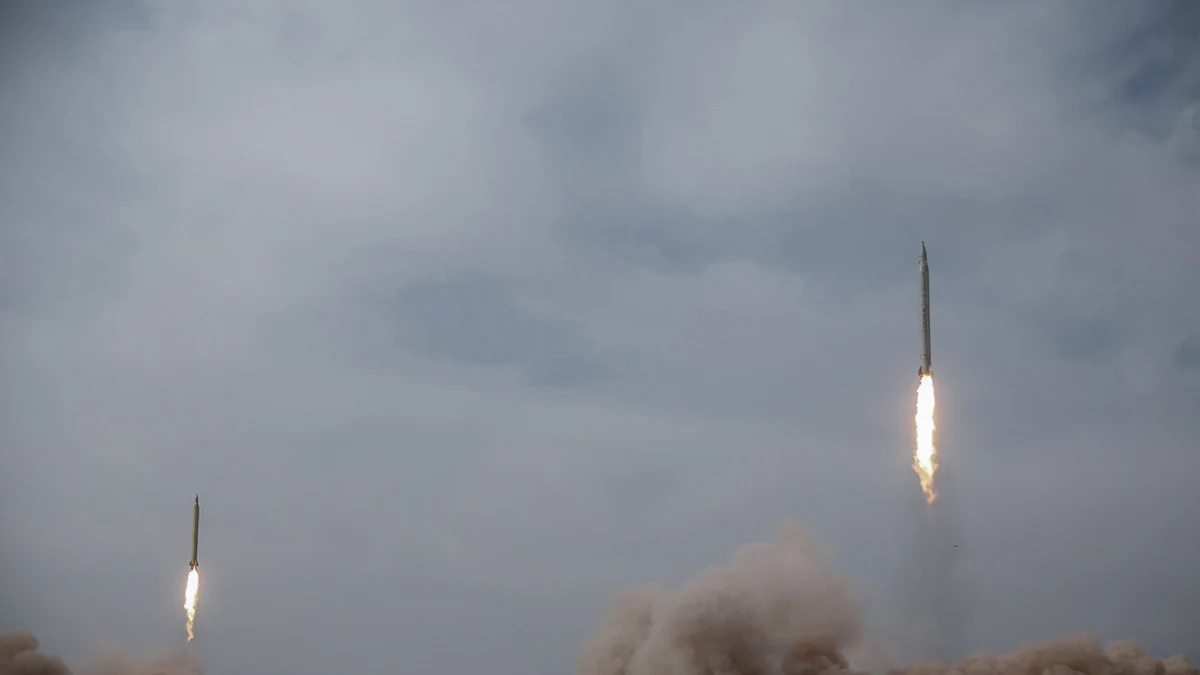
Iran has threatened to tighten its closure of the Strait of Hormuz if the United States maintains its naval blockade, as White House sources told CNN that Washington is finalizing a new military escalation against Tehran.
The US State Department issued warnings to American nationals in around ten countries to leave the area immediately, three days after the most recent US strikes on Iranian military and civilian installations. President Donald Trump said on Friday that he would hit Iran very hard until it surrendered.
Major General Ali Abdollahi, commander of Iran's Khatam al-Anbiya Central Headquarters, warned regional countries that they risked being consumed by the flames of war if they continued to serve as a defensive shield against what he called criminal and aggressive US actions. He said the United States was rapidly descending the path of escalating regional tensions.
Kuwait struck again
Kuwait came under drone attack in the early hours of Saturday, in what Kuwaiti authorities described as Iranian aggression targeting government facilities. On Friday, Kuwait's Defense Ministry had announced the interception and destruction of several drones over its airspace, with material damage caused by falling debris. Kuwait hosts significant US military installations, including Ahmed Al Jaber air base and Camp Arifjan, making it a recurring target in Tehran's retaliation strategy against Washington's regional presence.
Tanker hit near Hormuz
A tanker was struck by a projectile of unknown origin near the entrance to the Strait of Hormuz, off the coast of Oman, the UK Maritime Agency confirmed. No injuries were reported and no party had claimed responsibility at the time of publication. The strait carries 25 percent of the world's oil and natural gas in peacetime.
Yemen's Houthi rebels, who announced a naval blockade against Saudi Arabia on July 20, said they had forced eight Saudi vessels to change course, without specifying when.
Saudi-led maritime coalition
Saudi Arabia is working to establish what it has named the Multinational Maritime Defense Alliance, backed initially by 13 countries including Kuwait, Bahrain, Qatar, Turkey, Egypt, Jordan, Pakistan, and Yemen, along with EU support. The coalition aims to protect trade routes and energy supply in the Red Sea, the Gulf of Aden, and the Strait of Bab al-Mandeb.
Less than a week ago, US Central Command paused its offensive after 13 consecutive nights of strikes on Iran, while Trump described talks with Tehran as increasingly serious. That window of detente has since been closing.


