


Iranian Supreme Leader Mojtaba Khamenei has reshuffled Tehran's security apparatus by issuing seven decrees appointing Revolutionary Guard veterans to key regime positions.
The appointments solidify the old revolutionary guard in the primary levers of power across Iran's defense, intelligence, and diplomatic structures.
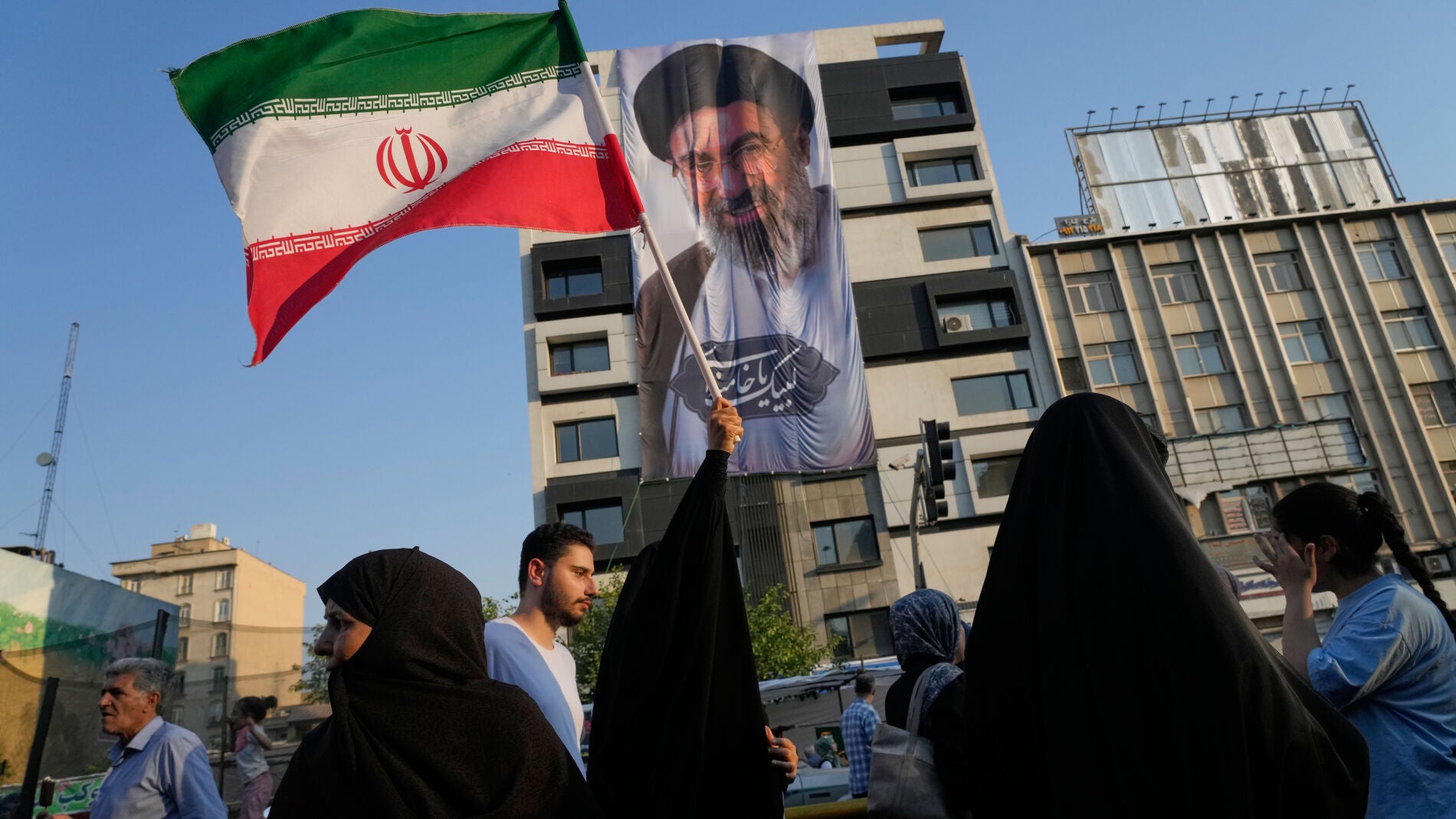
Under the decrees issued over two days in August, veteran Islamic Revolutionary Guard Corps general Mohsen Rezaei was appointed secretary of the Supreme National Security Council. Rezaei, who is subject to an international arrest warrant for terrorism, takes over the most influential body in the Iranian regime.
Supreme National Security Council appointment
The selection of Rezaei reflects a debt dating back forty years to the Iran-Iraq war. Mojtaba Khamenei served at the front at age seventeen, while Rezaei, then around twenty-seven, commanded the Revolutionary Guard and maintained close ties to revolutionary leader Ayatollah Ruhollah Khomeini.
During that period, Rezaei sided with President Ali Khamenei, Mojtaba's father, during a fierce power struggle against the prime minister. That support created a political obligation that the current Supreme Leader is now repaying.
Mojtaba Khamenei was elevated to Supreme Leader eight days after a joint United States and Israeli attack killed his father on February 28, 2026. The Revolutionary Guard imposed his appointment on the Assembly of Experts and the Guardian Council despite his lack of military experience, state magistracy, or the constitutional status of a Grand Ayatollah.
Rezaei previously served as personal military advisor to Ali Khamenei. The elder Khamenei recently reappeared in public after disappearing following the February attack on his compound, though his physical and mental state remains unknown.
Historical ties and wartime debt
Rezaei began his militant career prior to the 1979 revolution in the anti-Shah jihadist group Mansurun. He led the Revolutionary Guard for sixteen years until 1997, earning prestige during the liberation of Khorramshahr in May 1982. He later spent twenty-four years as secretary of the Expediency Discernment Council, where he worked to contain former president Akbar Hashemi Rafsanjani.
Rezaei also holds a doctorate in economics. His dual background as a former commander and economist positions him to oversee future talks regarding Iran's severe economic crisis.
While President Masoud Pezeshkian formally chairs the Supreme National Security Council and signs the secretary appointment, the choice is restricted to the Supreme Leader's three personal representatives. Khamenei named Rezaei as his representative before Pezeshkian endorsed the decision.
Rezaei replaces Mohammad Bagher Zolghadr, who was demoted to political advisor after four and a half months in the position.
Institutional authority and Western misconceptions
The restructure highlights structural differences between Iran's government and Western parliamentary systems. In Iran, the parliament holds limited legislative authority compared to the Assembly of Experts, while key cabinet ministries report directly to the Supreme Leader rather than the president. The Guardian Council acts as a moral police force verifying the orthodoxy of all high officials.
The Supreme National Security Council coordinates defense, security, and foreign policy decisions, ranking above the Ministry of Defense. A spokesman for the Foreign Ministry recently confirmed that all diplomatic negotiations conducted by the ministry remain under the council's direct supervision.
Analyst Hamidreza Azizi noted that Rezaei's arrival indicates the most radical faction of the regime is consolidating power. Iranian analyst Omid Memarian similarly stated that figures advocating for an agreement in Tehran currently hold no position of power.
Shift toward negotiating under fire
The hardline shift was evident in June following the signature of a memorandum between Tehran and Washington. After Khamenei issued a message stating that he held a different opinion on the deal in principle, Rezaei publicly cited the statement in media interviews to argue that the leader's stance would have yielded better results.
Rezaei declared his opposition to a ceasefire, asserting that Iran should negotiate while continuing military operations. This signaled a doctrine shift from negotiating during a ceasefire to negotiating under fire.
The decrees also reorganised military command by appointing General Ali Abdollahi as Chief of Staff of the Armed Forces. Abdollahi, an IRGC member since 1979, puts regular military forces under Revolutionary Guard leadership.
Revolutionary Guard control of regular military
General Kiumars Heidari, who originates from the Artesh regular army, was appointed as Abdollahi's deputy. The arrangement cements Revolutionary Guard dominance over the conventional military, dispelling American expectations of a potential palace coup by regular forces against the IRGC.
The new structure establishes two primary figures in regime leadership. Ahmad Vahidi commands the Revolutionary Guard to direct military escalation, while Rezaei manages the Security Council secretariat to set negotiation boundaries.
The appointments consist of senior figures rather than a younger generation, with the youngest appointee, Heidari, born in 1964. All seven officials are veterans of the 1979 revolution and the Iran-Iraq war.
Sanctions and international criminal warrants
Naval operations in the Strait of Hormuz remain under Rear Admiral Ali Ozmai. Rezaei stated in July that controlling the waterway, through which 20 percent of world oil and 30 percent of global gas pass, was worth more to Iran than dozens of atomic bombs.
Six of the seven newly appointed officials belong to the IRGC, which the European Union designated as a terrorist organization in January 2026, with Spain voting in favor of the measure.
Rezaei and Vahidi have been wanted by Interpol since 2007 for their involvement in the July 18, 1994 bombing of the Argentine Israeli Mutual Association headquarters in Buenos Aires, which killed 85 people.
Vahidi and Heidari are subject to sanctions imposed by Washington, Brussels, and London, while Abdollahi is listed on United States Treasury sanctions. Hossein Taeb, appointed head of the Basij militia, has been sanctioned by the United States since 2010 for suppressing protests in 2009.


