Morocco is consolidating its position in the critical minerals market, according to a new report from the International Energy Agency that highlights the country's phosphate reserves while noting its growing presence in cobalt and graphite.
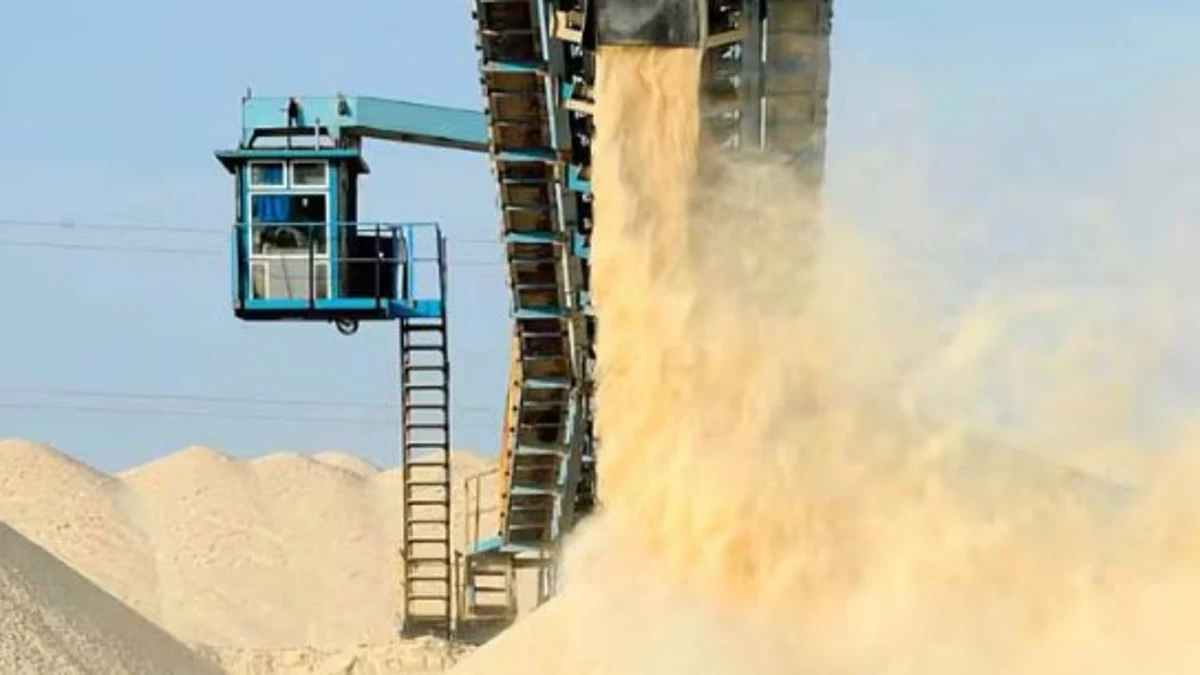
The IEA's Global Critical Minerals Outlook 2026 report notes that Morocco holds 70% of the world's phosphate reserves, though that position has not yet translated into equivalent dominance in production. Morocco currently accounts for around 15% of global mineral supply, while China leads extraction with 45% of projected 2025 output despite holding only 5% of world reserves. The United States ranks third at roughly 10% of global supply.
In the purified phosphoric acid segment, a key input for LFP cathodes whose global market share in electric vehicles reached 55% in 2025, up from 15% in 2020, the IEA projects Morocco will hold only 5% of world production capacity by 2035, while China retains 75%. However, the report notes that Morocco, the United States and Canada together are expected to represent more than 55% of projected power purchase agreement capacity outside China by 2035.
The IEA also reports that purified phosphoric acid prices rose nearly 4% in the first quarter of 2026, surpassing $1,500 per tonne. The agency attributes this to rising sulfuric acid costs linked to the Middle East conflict and a sharp increase in phosphate rock prices, driven in part by the suspension of Egyptian exports announced by Egypt's Ministry of Petroleum and Mineral Resources.
Chinese Investment and Free Trade Leverage
The report highlights that free trade agreements linking Morocco with the European Union and the United States allow Chinese-funded battery supply chain projects to benefit from preferential market access that direct exports from China would not receive. The IEA specifically names Gotion, BTR, Huayou and CNGR as companies that have launched battery supply chain projects in Morocco, citing the country's phosphate reserves as a primary driver of those decisions.
Cobalt and Graphite
Beyond phosphate, the report identifies Morocco as an emerging player in cobalt and graphite. It cites a Managem project to convert cobalt metal production at the Bou Azzer plant into cobalt sulphate, a key component for electric vehicle batteries, with an estimated capacity of 6 kilotonnes per year including 1.2 kilotonnes of cobalt content. The global cobalt sulphate market is expected to grow by nearly 60% by 2035, the IEA says, though supply remains concentrated in a limited number of operations outside China and Indonesia.
On graphite, the report mentions an anode plant under development in Tangier that, together with a facility in Becancour, Canada, is expected to produce around 20 kilotonnes of battery-grade coated spherical graphite by 2030. China's share of global natural graphite production has fallen from 84% in 2023 to around 80% in 2025, partly due to the restart of the Balama mine in Mozambique and partial output from the Lindi Jumbo project in Tanzania.