Greece recorded one of Europe's lowest wholesale electricity prices for Thursday, August 13, as renewable energy covered nearly 70 percent of demand. The high clean energy output offset an increase in power consumption caused by high summer temperatures.
The average clearing price on the Greek Day-Ahead Market fell to 95.81 euros per megawatt-hour for delivery on Thursday. That represents a drop of approximately eight percent compared to Wednesday's average of 104.46 euros per megawatt-hour, according to European energy market data.
The lower prices positioned Greece in sharp contrast to major economies in Western and Central Europe. Day-ahead wholesale electricity cleared at 147.07 euros per megawatt-hour in Germany, 154.68 euros in France, and 161.55 euros in Austria.
Power costs were even higher across Southeastern Europe. The day-ahead market closed at 138.29 euros per megawatt-hour in Bulgaria and reached 163.54 euros per megawatt-hour in Romania.
Renewable Energy Output Nears Record High
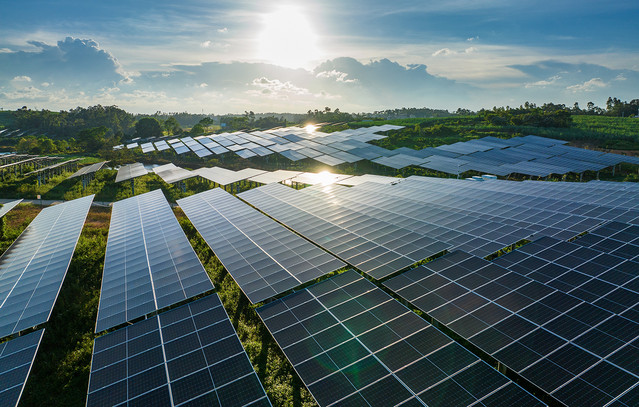
Increased generation from wind turbines and solar photovoltaics was the main driver behind the price separation between Greece and the rest of Europe. Projections for Thursday indicated that wind and solar installations alone would cover 63.2 percent of the national load.
When hydroelectric generation, renewable production from the island of Crete, and battery storage contributions are added, clean energy total participation nears 70 percent of overall electricity demand. Data shows this performance is expected to reach historic highs as the second-highest renewable share ever recorded in the country.
Hydroelectric power plants are estimated to account for about five percent of the load. Renewable energy systems operating on Crete are expected to contribute 1.5 percent, while battery storage systems will provide approximately 0.6 percent.
Market Mechanics and Summer Demand
High renewable penetration allowed the Greek wholesale market to maintain average prices below the 100 euro per megawatt-hour benchmark. Meanwhile, power prices across Central and Southeastern Europe frequently fluctuated between 140 and 160 euros per megawatt-hour or higher.
The low wholesale rates coincided with a surge in national power usage triggered by hot weather and widespread air conditioning operation. Under wholesale power market rules, wind and solar generation enter the market with zero fuel costs, displacing more expensive natural gas and thermal power plants to lower overall clearing prices.
The Day-Ahead Market is the official European trading platform where electricity is bought and sold for delivery on the following day. Greece participates in regional market coupling, which connects national power grids across Europe to facilitate cross-border electricity flows based on supply and demand differentials.
The strong renewable performance demonstrates how expanding solar, wind, and energy storage capacity can help contain wholesale electricity costs even during peak summer demand periods.