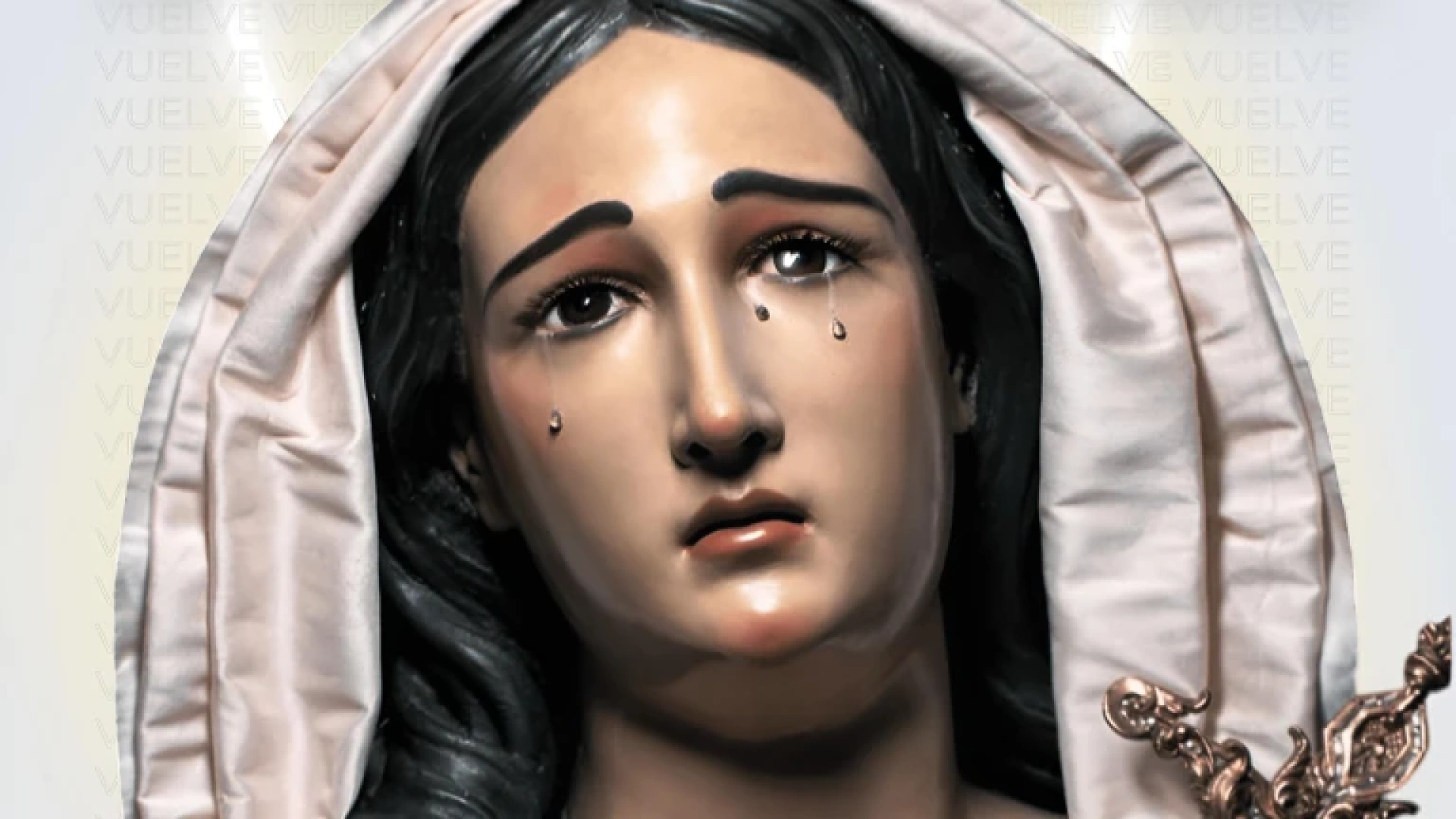
The Spanish city of Granada will stage an extraordinary procession of María Santísima del Sacromonte in October 2027 for a national religious congress.
The Cofradía del Cristo del Consuelo will organise the III Congreso Nacional de Hermandades de los Gitanos on 1 and 2 October, gathering twenty Romani brotherhoods from across Spain.
The extraordinary procession is scheduled for Saturday, 2 October, starting at 5:00 p.m. The procession will depart from the Cathedral of Granada and conclude at the Abbey of Sacromonte, the sanctuary where the statue carved by Manuel González is venerated.
Ahead of the main procession, the statue will be transferred from the abbey church down to the cathedral. She will travel on her distinctive palio, a ceremonial canopy float characterised by metalwork crafted entirely in copper.
Restoration of the Cristo del Consuelo carving
The Cofradía del Cristo del Consuelo is also preparing to restore its primary religious image, a historic Christ carving by baroque sculptor José Risueño. A technical report has recommended carrying out the restoration, and brotherhood officials are currently reviewing several proposals to select the specialist restorer who will lead the project.
Although the fraternity has not yet fixed a formal execution timetable, leaders consider it most likely that the work will conclude after the next Holy Week. The restoration will not disrupt the fraternity on Holy Wednesday, because the brotherhood has processed a replica carved by sculptor Miguel Zúñiga since 1989 for its annual penitential station.
In Andalusian Holy Week, brotherhoods carry ornate floats through the streets to depict the Passion of Christ. The Holy Wednesday procession of the Gitanos is famous for its demanding climb through the steep Sacromonte hillside, where bonfires burn along the path and spectators sing traditional flamenco saetas. The brotherhood introduced the Zúñiga replica decades ago to shield the delicate seventeenth-century original from the heat, smoke, and outdoor elements.
New sculptures for Holy Wednesday
The brotherhood will also expand its processional float on Holy Wednesday with two newly commissioned statues. The figures represent the Fathers of the Church and will join the Christ float, known as the paso de Cristo, during the annual penitential march.
The fraternity commissioned sacred sculptor Jorge Marín to carve the two new figures. In Christian theology, the Fathers of the Church are the influential early scholars, theologians, and bishops who established foundational doctrines and biblical interpretations for the Christian faith.
The addition of the sculptures marks a significant artistic development for the fraternity. Spanish processional floats often feature secondary figures, known as misterios, that surround the central image of Jesus Christ to illustrate scriptural events and doctrinal themes during Holy Week processions.
National gathering of Romani brotherhoods
The October 2027 meeting in Granada will serve as the third edition of the biennial gathering. The first two editions of the national congress took place in Seville and Utrera, two Andalusian communities with longstanding Romani religious brotherhoods.
Romani fraternities have formed an integral part of Spanish Catholic religious life for centuries, uniting community members around shared religious devotion, cultural heritage, and charitable work. Twenty distinct corporations from across Spain will send delegations to the Granada congress to share experiences, discuss fraternity governance, and celebrate their shared traditions.
Extraordinary processions are uncommon events reserved for major religious milestones, jubilees, or national congresses. Outside Holy Week, brotherhoods must receive formal ecclesiastical permission from the local archdiocese before taking their venerated statues into public streets.
Sacromonte Abbey and Granada Cathedral
The route connects two of the most significant religious landmarks in Granada. The Cathedral of Granada, dedicated to the Incarnation, was established in the sixteenth century in the heart of the historic city centre and stands as one of the foremost examples of Spanish Renaissance architecture.
The Abbey of Sacromonte sits high on Mount Valparaíso above the Darro River valley, overlooking the traditional cave quarter that has been home to Granada Romani families for generations. Founded in the early seventeenth century, the abbey complex preserves ancient Christian relics and remains the permanent sanctuary for the image of María Santísima del Sacromonte.
The Virgin will make the return journey to the abbey beneath her copper canopy float. While most Andalusian brotherhoods use silver or silver-plated metalwork for their processional canopies, the copper orfebrería of the Cofradía del Cristo del Consuelo pays tribute to the historic metalsmiths and artisan forges of the Sacromonte caves.
Brotherhood officials will next select the restorer from the proposals currently under review, before preparing for the upcoming Holy Week procession when the new Church Father statues will make their public debut.