


Global warming may be weakening permafrost in the Arctic and making mountain slopes and glaciers more vulnerable to major landslides triggered by earthquakes, according to a study by the GEOMAR Helmholtz Centre for Ocean Research Kiel published in the journal Proceedings of the National Academy of Sciences (PNAS).
The researchers found that the deterioration of permafrost, ground that stays frozen for long periods and helps hold rock together, could be weakening frozen slopes and increasing their vulnerability to strong shaking. Permafrost is common across much of the Arctic, and the region is known to be warming faster than the global average.
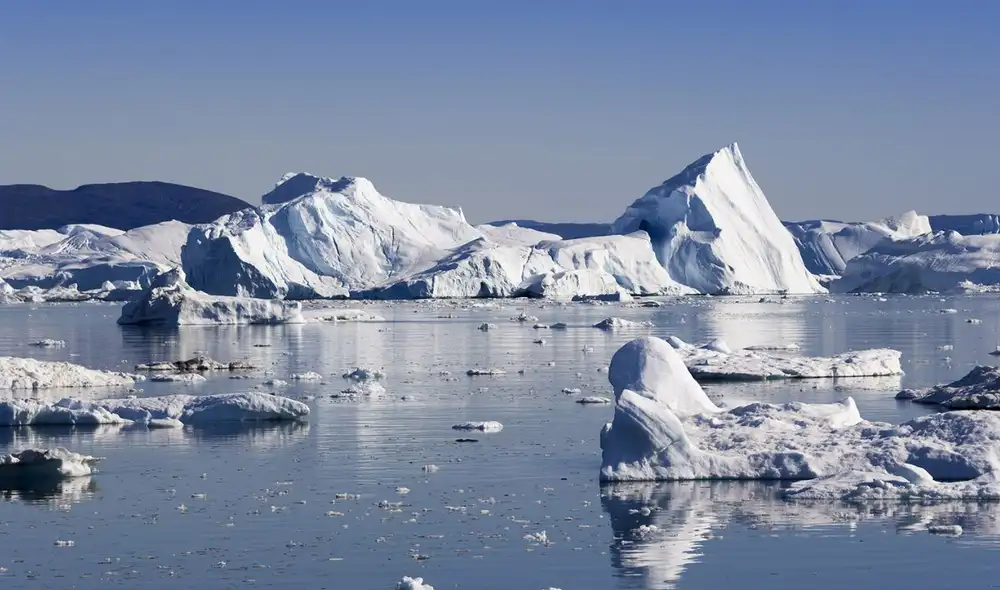
Earthquake on Jan Mayen triggered a huge avalanche
The study focused on the magnitude 6.5 earthquake that struck the Norwegian island of Jan Mayen on March 10, 2025. Just three minutes after the quake, a massive rockslide broke away from a volcanic slope and ended up covering between 30% and 50% of the Kjerulf glacier.
The earthquake dislodged between 0.81 and 1.17 million cubic metres of volcanic material. The rock descended the slope above the Kjerulf glacier and spread across the icy surface, coming close to the coast.
The researchers also detected damage on the neighbouring Weyprecht glacier, where large masses of ice broke away. After reviewing four decades of satellite imagery, the team found no evidence of an event of similar scale linked to previous earthquakes on the island.
Jan Mayen is a volcanic island in the Arctic, administered by Norway and located between Greenland and mainland Norway. It is largely uninhabited and dominated by the Beerenberg volcano.
How permafrost thaw weakens mountains
The explanation appears to be linked to the deterioration of permafrost. As temperatures rise, ice within rock cracks can melt and disappear, reducing the stability of slopes that would otherwise stay locked together by frozen ground.

Climate data analysed by the scientists show that Jan Mayen has been warming since the 1970s, while periods of extreme cold have become less frequent on the island. The study suggests the earthquake itself triggered the avalanche, but that the prior warming may have primed the terrain, allowing the rockslide to be far larger than it would otherwise have been.
About the study
GEOMAR, based in Kiel, Germany, is one of the country's leading marine and earth science research institutions. PNAS is a widely cited multidisciplinary scientific journal that publishes peer-reviewed research across the natural sciences, including earth and climate science.


