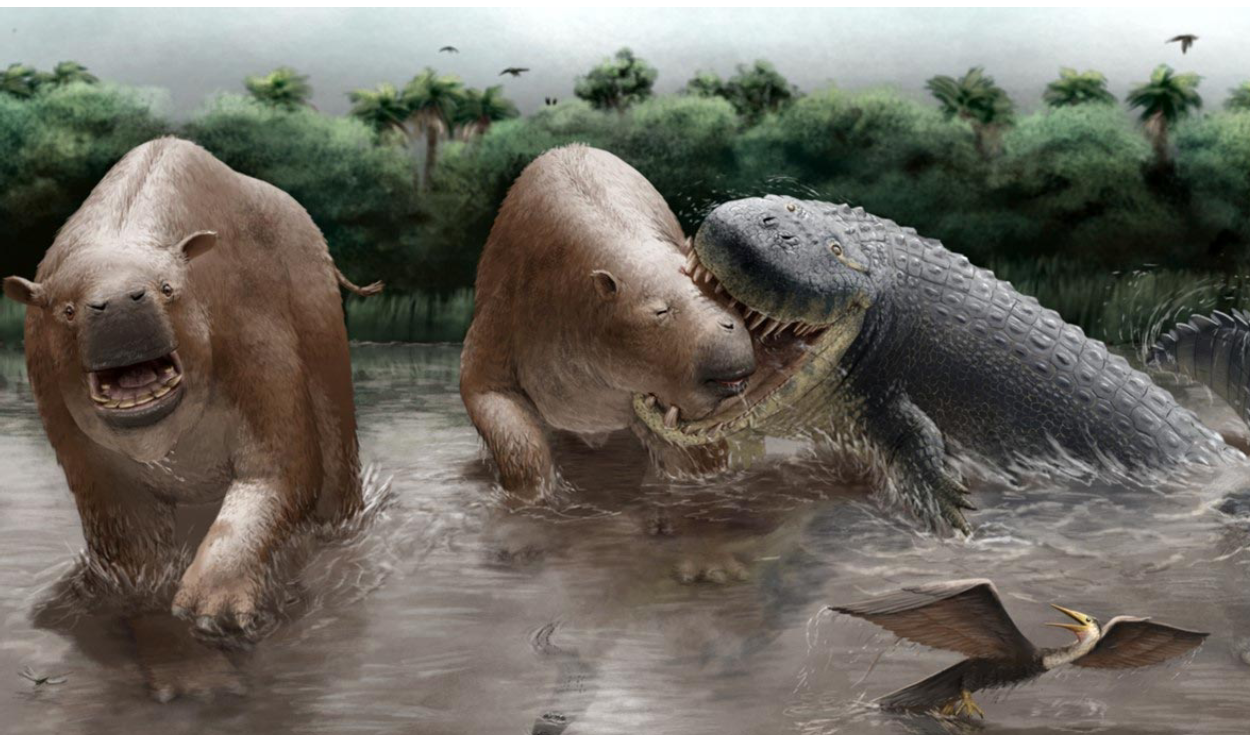
Giant crocodilians dominated the food chain in South America more than 10 million years ago, according to a new analysis of fossils that reveals how effectively they hunted large prey.
Researchers found that a vast region of South America was once covered by a system of lakes that supported a very different fauna from today. Giant turtles and large crocodilians lived in the water, while anacondas, sabre-toothed mammals, terror birds and sebecids, terrestrial relatives of crocodiles, lurked on the shores.
Within that ecosystem, crocodilians appear to have held the top position among predators. Oscar Wilson, a postdoctoral researcher at the University of Helsinki, said there was so much prey available that mammalian predators could not consume it all. He said the new study showed that crocodilians, in particular, were the most important predators in the region, especially when it came to hunting large prey.
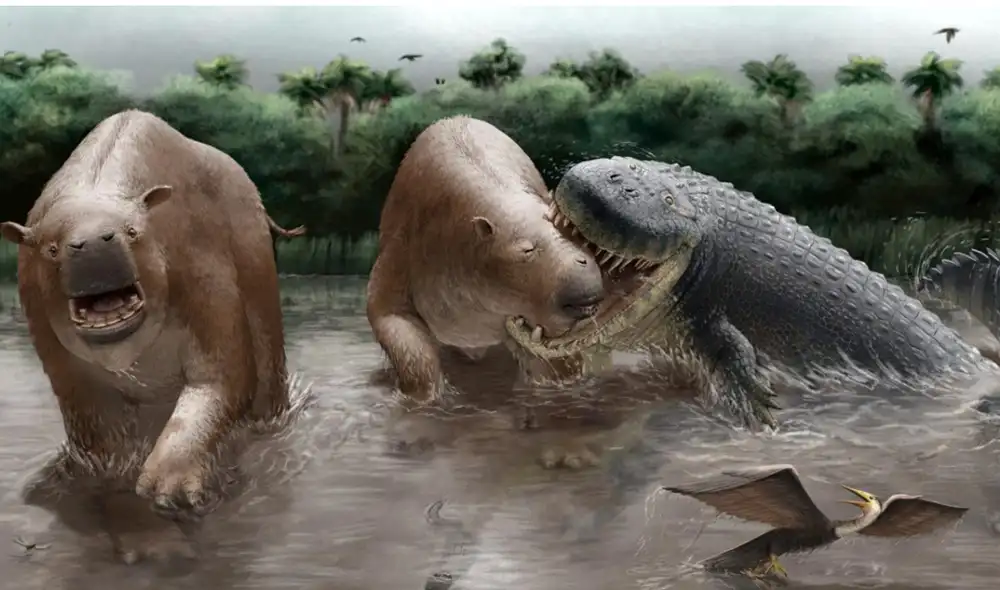
Purussaurus, one of the great predators
Animals living along the shores of these ancient lakes included giant ground sloths, glyptodonts and various groups of ungulates. Some of these herbivores weighed more than a tonne, making them a major food resource for predators.
The largest known hunter in this ecosystem was Purussaurus neivensis, a relative of modern caimans. This enormous crocodilian could grow to around seven metres in length and weigh roughly 1,800 kilograms.
Its size made it capable of taking on very large animals. Researchers believe it may even have influenced the population sizes of the herbivores that shared its habitat.
Caimans belong to the crocodilian order, the same broad group that includes modern crocodiles and alligators, reptiles known for powerful jaws and a semi-aquatic hunting style.
Bite marks reveal the attacks
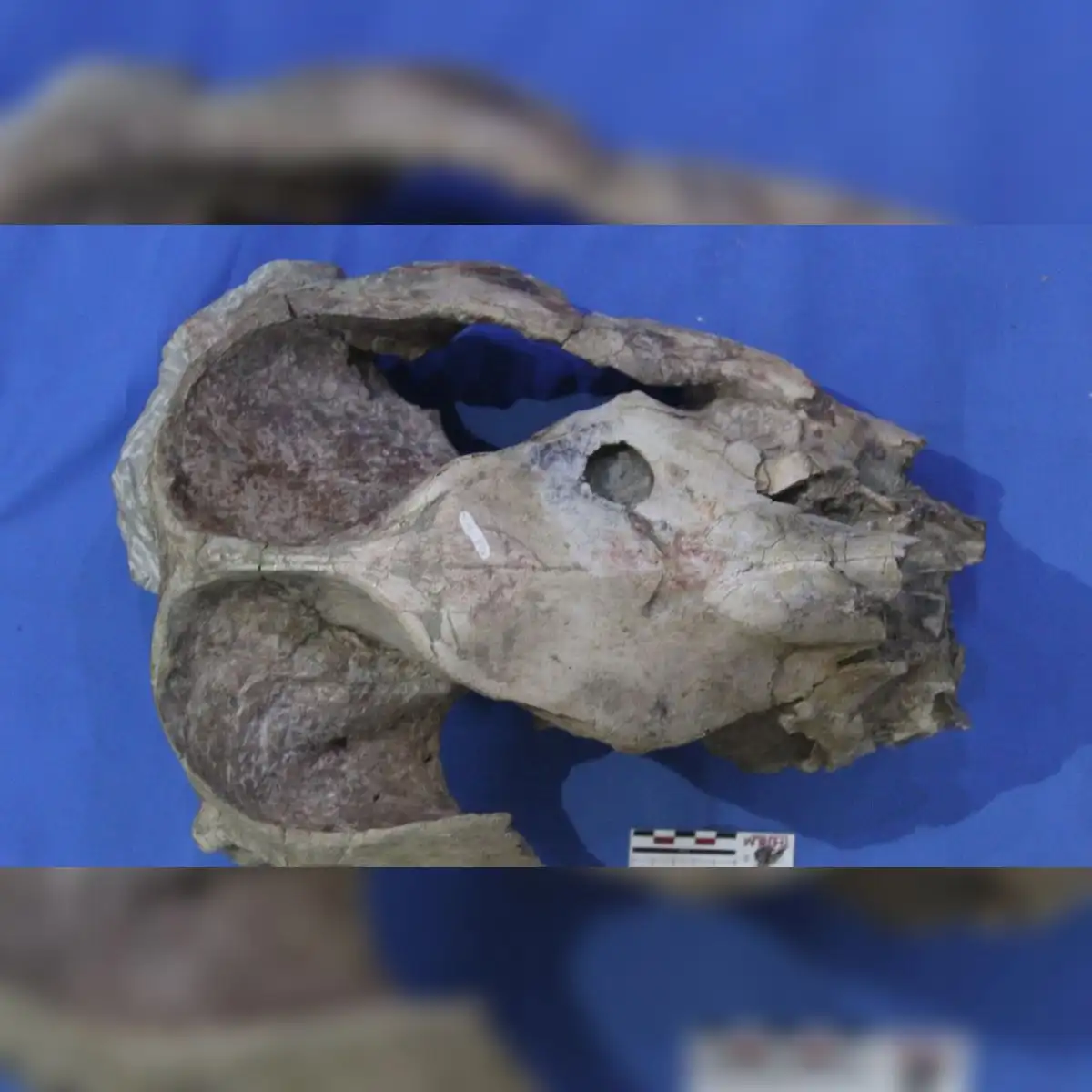
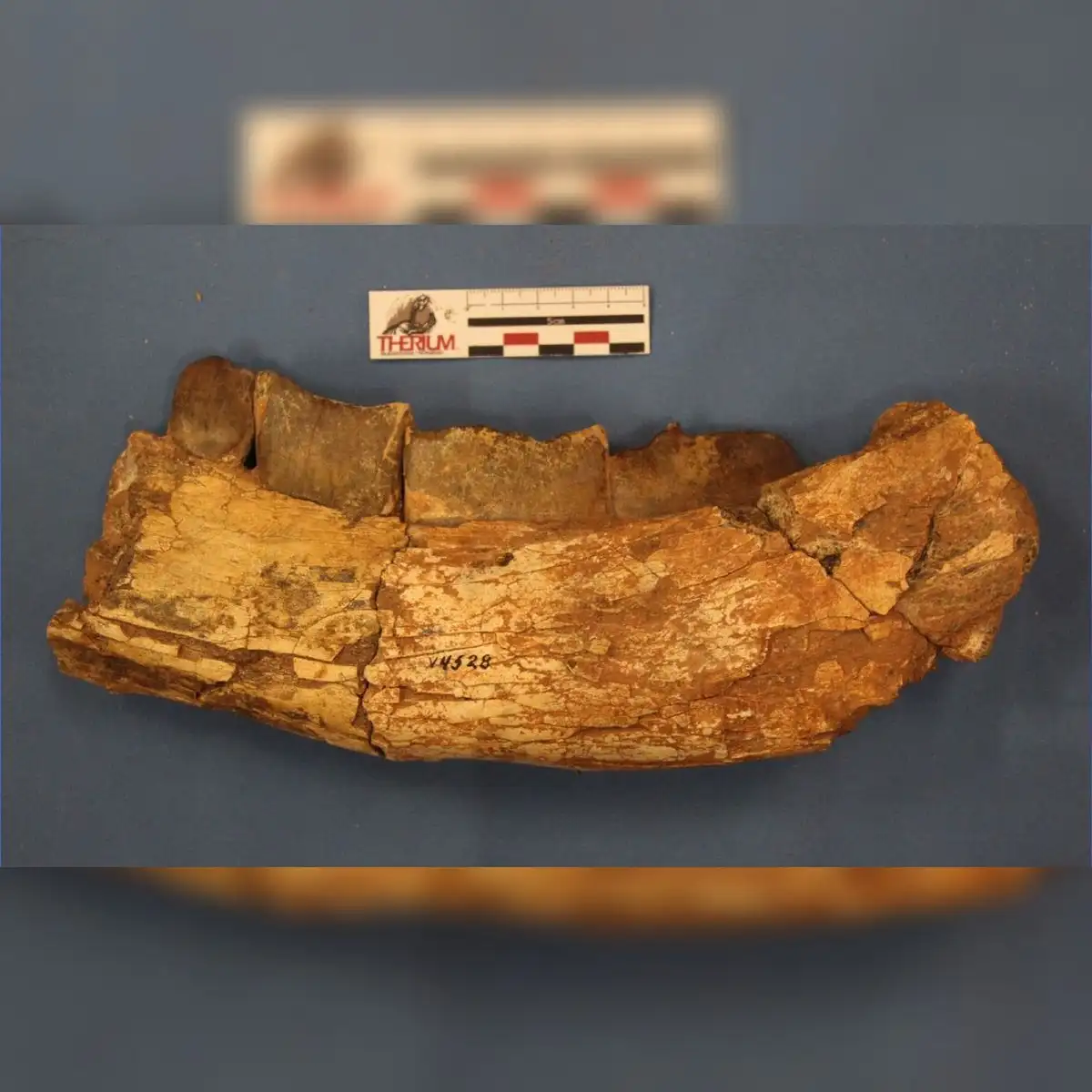
To understand how these animals interacted, researchers examined fossils held in museum collections. Marks left by bites and teeth on the bones of herbivores provide direct evidence of the attacks that took place in that ecosystem.
The fossils studied are between 10.5 and 16 million years old, a span that falls within the Miocene epoch. The frequency of marks likely produced by Purussaurus indicates the animal played a prominent role as a predator in those tropical environments.
Wilson said the frequency of marks probably produced by Purussaurus suggested it was an important predator in these tropical ecosystems.