

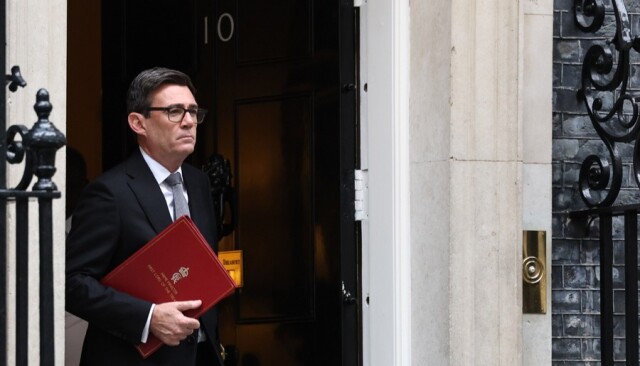
British Prime Minister Andy Burnham has reiterated that he wants the United Kingdom to rejoin the European Union within his lifetime.
Speaking on Monday, Burnham ruled out any attempt to reverse Brexit during the current parliament, insisting that any future decision on membership must be made by voters rather than politicians.
Burnham made the remarks during an interview on Monday on the ITV breakfast programme Good Morning Britain, where he was questioned directly on whether he supported entering the European bloc again. He replied that to be completely honest, he would like to see Britain return to the European Union while he was alive, but insisted he would not move forward without taking the views of the public into account.
He added that he was not going to impose his personal opinions on the country. Instead, he said government leaders had to ensure that the British public remained the sole authority deciding whether the nation ever returned to the bloc.
Labour Party policy on Europe
The Prime Minister's television appearance followed his speech at the governing Labour Party annual conference in September, where he called on Britain to build closer economic and political ties with the European Union.
Political news outlet Politico noted that Burnham has stopped short of explaining the precise details of the partnership he intends to seek with Brussels. The Labour Party election manifesto for the 2024 general election, published under the leadership of Keir Starmer, explicitly ruled out rejoining the European single market or the customs union, and pledged not to restore freedom of movement with the bloc.
The European single market allows goods, services, capital and workers to move without internal borders among member countries, while the customs union sets common tariffs on goods arriving from outside Europe. Both arrangements formed the backbone of British commerce with continental Europe until the end of the post-Brexit transition period in December 2020.
Impact of the 2016 Brexit referendum
Burnham also argued on Monday that the core pledges made to the electorate during the 2016 referendum, which set Britain on course to exit the European Union, have not been delivered.
He said Britain had ended up with a harder Brexit than the version promoted during the referendum campaign. He said that this outcome had weakened the British economy and diminished government control over immigration, suggesting that the reduction in border control might come as a surprise to the public.
In the June 2016 referendum, British voters decided by 52 per cent to 48 per cent to withdraw from the European Union, ending more than forty years of membership. The official Vote Leave campaign had argued that leaving the bloc would give Britain full control over its borders and trade laws, though subsequent border checks and regulatory boundaries have introduced friction for British exporters.
Future negotiations and November summit
Burnham made clear that he is not advocating an application to rejoin the European Union during the lifetime of the current parliament. He said the United Kingdom remained very far away from taking that step at this specific moment, arguing instead that ministers must pursue practical measures so that the existing relationship works better than the current arrangement.
His television statements aligned with separate comments he made to The Sunday Times newspaper, where he said that accepting freedom of movement within the European Union should not be ruled out of future negotiations with European leaders.
British and European officials are organising a summit in November to address ongoing relations between London and Brussels. That meeting will concentrate strictly on technical problems affecting the current arrangement, rather than opening discussions on the future framework of the relationship.
Technical discussions between the United Kingdom and the European Union typically focus on easing customs bureaucracy, managing sanitary and phytosanitary rules on food shipments, and maintaining security data sharing under the existing Trade and Cooperation Agreement.


