

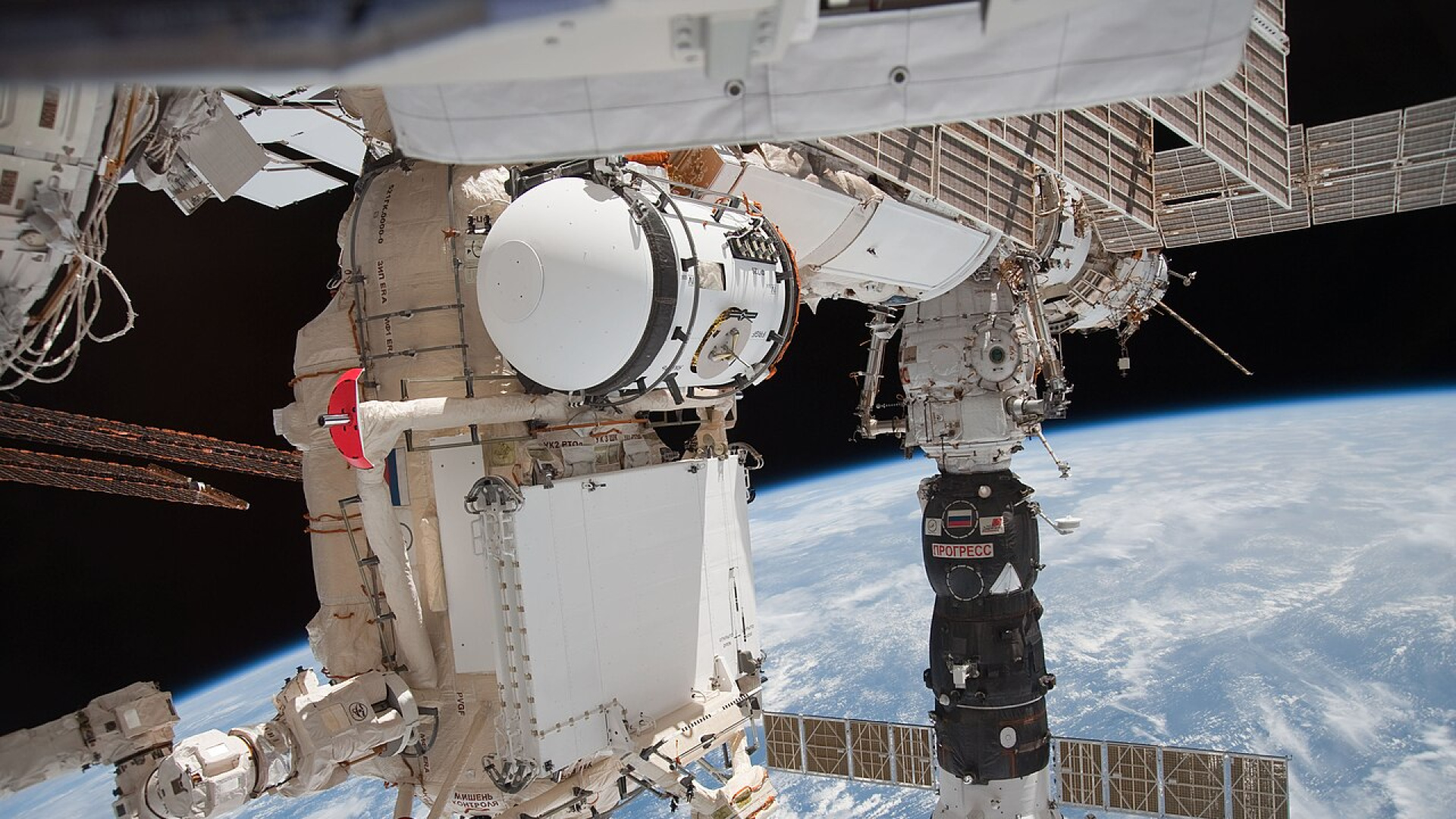
The International Space Station (ISS) will be visible from Barcelona this evening starting at 18:37, in a pass that will last approximately three minutes, according to the news outlet 247 News Agency. During that time, it will appear as a very bright white dot moving quickly across the sky, with no need for a telescope or any special equipment.
The station will travel from the northwest to the northeast and will pass over the area of the Ursa Major constellation, giving observers a chance to spot it with the naked eye. Unlike an aircraft, it will not show coloured lights or flicker. Instead, it will appear as a steady light moving steadily across the sky.
How to tell it apart from an aeroplane
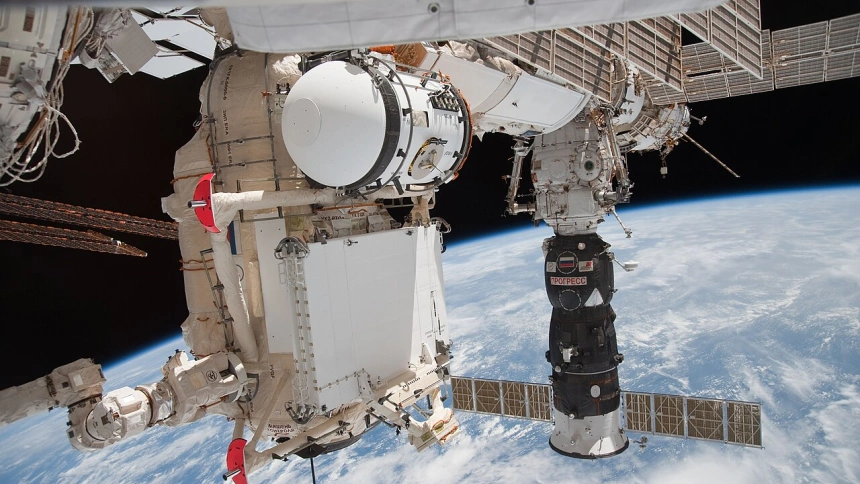
Recognising the International Space Station is not difficult once you know what to look for. It appears as a bright, white and steady point of light that moves quickly and continuously. It does not leave a trail like a meteor, and it does not show the intermittent flashing lights typical of aircraft.
The light observers see is actually sunlight reflected off the station, in the same way the Moon shines by reflecting sunlight. For that reason, the best opportunities to see it tend to come when the sky has already gone dark, or is growing dark, while the station itself is still catching the Sun's light.
A path that zigzags around the planet
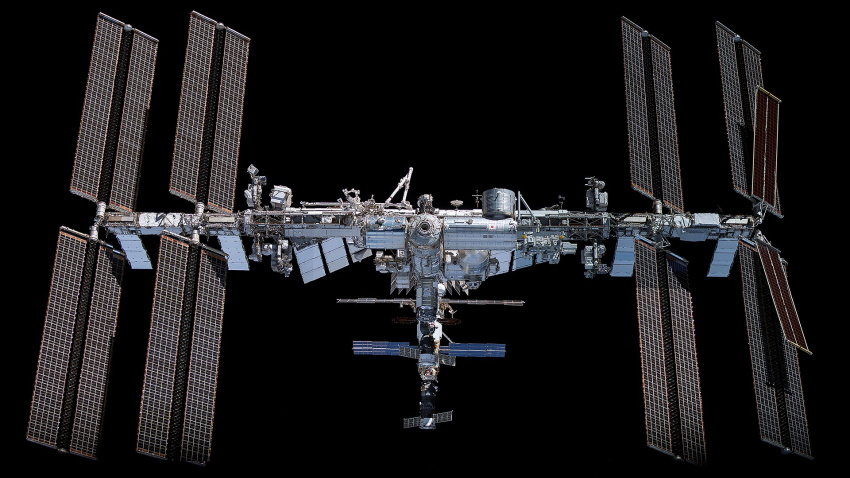
The International Space Station orbits the Earth at an altitude of around 400 kilometres, though that distance can vary slightly. Its orbit is tilted about 51.6 degrees relative to the equator, which means it does not always fly over the same regions of the planet.
As a result, the ISS travels across latitudes reaching roughly 51 degrees north and 51 degrees south, a band that takes it over places as different as London, Berlin and southern Argentina. Its path traces a kind of global zigzag as it moves along its orbit.
This combination of the station's own movement and the Earth's rotation means every flyover is different. Catalonia, however, is often in a favourable position to catch some of these passes, and the station's path occasionally runs almost directly over Barcelona.
Sixteen orbits of Earth every day
The ISS travels at more than 27,000 km/h, a speed that lets it complete a full orbit of the Earth roughly every 90 minutes. That works out to about 16 orbits a day, meaning the astronauts living aboard can see several sunrises and sunsets in a single day.
Missions aboard the station typically last between five and six months, though some run longer. One of the best-known examples is American astronaut Scott Kelly, who spent 340 days in space on a mission that helped scientists study, among other things, the effects of prolonged stays in microgravity.
Test yourself
At what time will the ISS become visible from Barcelona today?
What makes the ISS look different from an aeroplane in the sky?
How many days did astronaut Scott Kelly spend in space on his mission?
Have your say
Would you go outside to try to spot the ISS passing overhead?
Where it happened
Barcelona, Spain


